Huawei's Ascend 960 SuperPoD harnesses NPO technology to advance AI infrastructure, transforming how data is processed across massive computing systems.
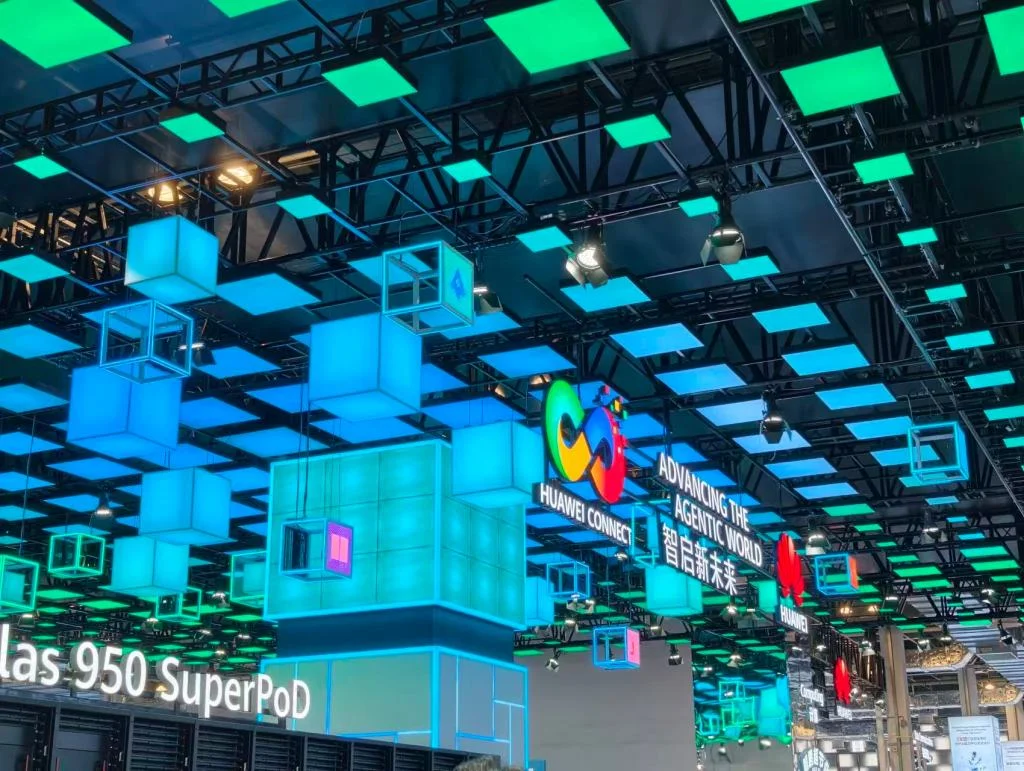
The Huawei CONNECT 2026 event revealed a pivotal shift in AI infrastructure, emphasizing not only the capabilities of AI but the significant computing power necessary to support expansive models. Huawei's Deputy Chairman, Wang Tao, shared groundbreaking insights while unveiling the Ascend 960 SuperPoD, which marks the debut of NPO technology in industry-standard SuperPoDs. This isn’t just another new product; it reflects a transformative approach to how we think about AI and its computational needs. The implications of this technology could ripple through industries that rely heavily on AI, from autonomous driving to healthcare.
The Limits of Conventional AI Architecture
With conventional AI computing relying on extensive server farms, simply adding more servers has proven insufficient as AI models scale to over 10 trillion parameters. This transformation marks a crucial moment in AI evolution; the performance bottleneck often lies in data exchange between chips. Traditional architectures can cause communication to occupy more than 40% of training time for expansive AI clusters, as noted by Huawei. The slow pace at which data moves can stall otherwise rapid advancements in AI performance.
That said, the challenges don't stop at scaling the server farms. When AI models grow and require increasingly complex data processing, it exposes older architectures' weaknesses. This doesn’t just increase training time; it elevates costs and operational complexity. The industry is beginning to recognize that merely throwing more hardware at the problem won't solve the underlying inefficiencies. Instead, a reevaluation of the entire computing framework is essential.
The Role of the Ascend 960 SuperPoD
The Ascend 960 SuperPoD stands out by accommodating up to 4,096 NPU cards, achieving a computing power of 8E FP8 and providing an incredible 1PB of HBM capacity. However, its real significance stems from the implementation of NPO (Near-Packaged Optics), a technology designed to enhance data transfer efficiency. This level of computing capability creates an architecture that could fundamentally change how data is processed across large networks.
As AI workloads grow, the volume of moving data between chips escalates exponentially. Traditional copper connections and detachable optical modules confront serious challenges in areas like bandwidth and latency. NPO tackles these limitations by positioning optical components closer to AI chips, effectively shortening the travel distance for high-speed electrical signals. This strategic placement is a key innovation because it reduces latency and improves data transmission speeds, crucial factors in high-stakes AI applications.
Huawei’s Hi-ONE product, developed for NPO, showcases impressive capabilities with a transmission capacity of 7.2T per engine. By integrating roughly 5,500 Hi-ONE units, the SuperPoD significantly decreases the need for about 48,000 standard 800G optical modules, resulting in a substantial power reduction of over 550kW. The engineering behind this product could set new standards for energy efficiency in data centers, which is vital given mounting pressures on organizations to reduce their carbon footprints.
Moreover, the reliability of the system is set to improve, as Huawei projects a doubling of the mean time between failures, while availability could soar to 99.8%. This improvement hints at a new era of resilience in AI computing systems. It means less downtime and more consistent performance in high-demand environments. Huawei's multifaceted approach indicates a commitment to not just chip design but also interconnectivity, storage solutions, and system architecture holistically. This is more significant than it looks; reliability is often overlooked in tech advancements, yet it shapes user experience profoundly.
The Shift from Chip Competition to System Integration
A prevailing theme in Wang Tao’s keynote was the understanding that merely enhancing chip performance isn’t enough in the super-large-scale AI model domain. The interaction between chips, data movement strategies, memory sharing, and cohesive storage solutions are now equally crucial. This reflects a shift in priorities within the tech community, where the notion of "bigger is better" is being reevaluated.
As Huawei envisions AI clusters scaled to a million cards—a scenario where continuous AI operations support demands from autonomous vehicles, smart devices, and beyond—the appetite for advanced computing power is set to surge. What this means for you, whether you're a developer or a business owner, is that the infrastructure supporting AI is changing fast. Future AI advancements won't solely hinge on crafting larger models; they'll depend on establishing a sophisticated infrastructure that encompasses chips, computing resources, networks, and storage. It's a shift from fragmented solutions to integration that promises efficiency.
Implications and Future Outlook
Attending the event left me contemplating a key takeaway: while AI advances rapidly, the foundation of computing power is being meticulously reconstructed to support it. The vision for an interconnected, intelligent world likely starts with innovations like the Ascend 960 SuperPoD, where the integration of chips and networks is positioned to redefine computing norms. And yet, this leaves open questions about scalability, power demands, and the environmental impact of such vast systems.
This evolving landscape isn't just a tech issue; it's about how these advancements will intersect with our daily lives. If you're working in this space, you must think critically about how these architectures affect everything from supply chains to consumer behavior. The future of AI will rest not just on its algorithmic prowess but on its underlying infrastructure. As more players enter this arena, competition will likely intensify around system integration, signaling a new phase in the technological arms race.
Discussion
Sign in to join the discussion.