Peak Design’s new lineup pairs dual 25W Qi2 charging with a 65W travel charger and a 5,000mAh kickstand battery.
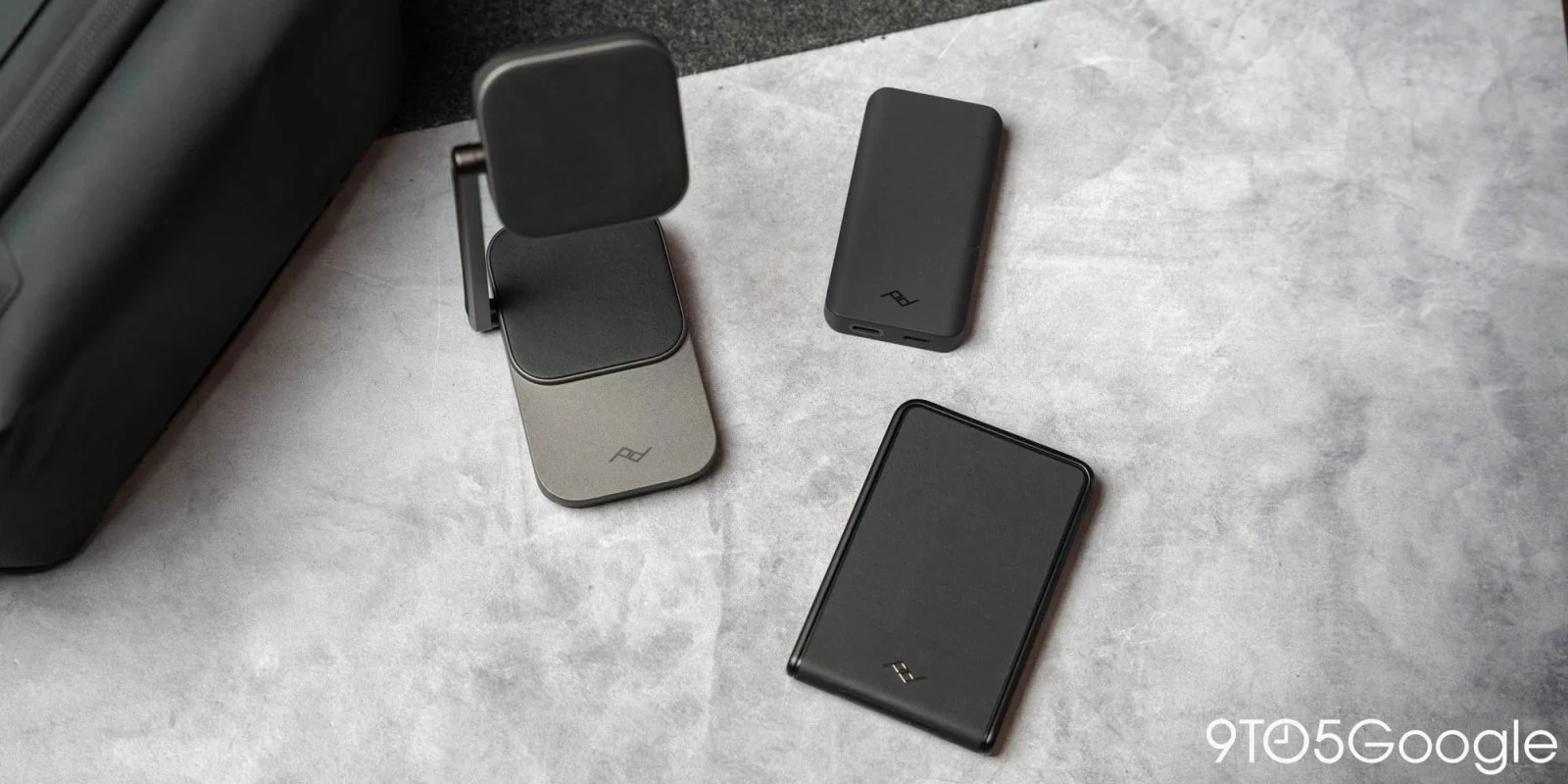
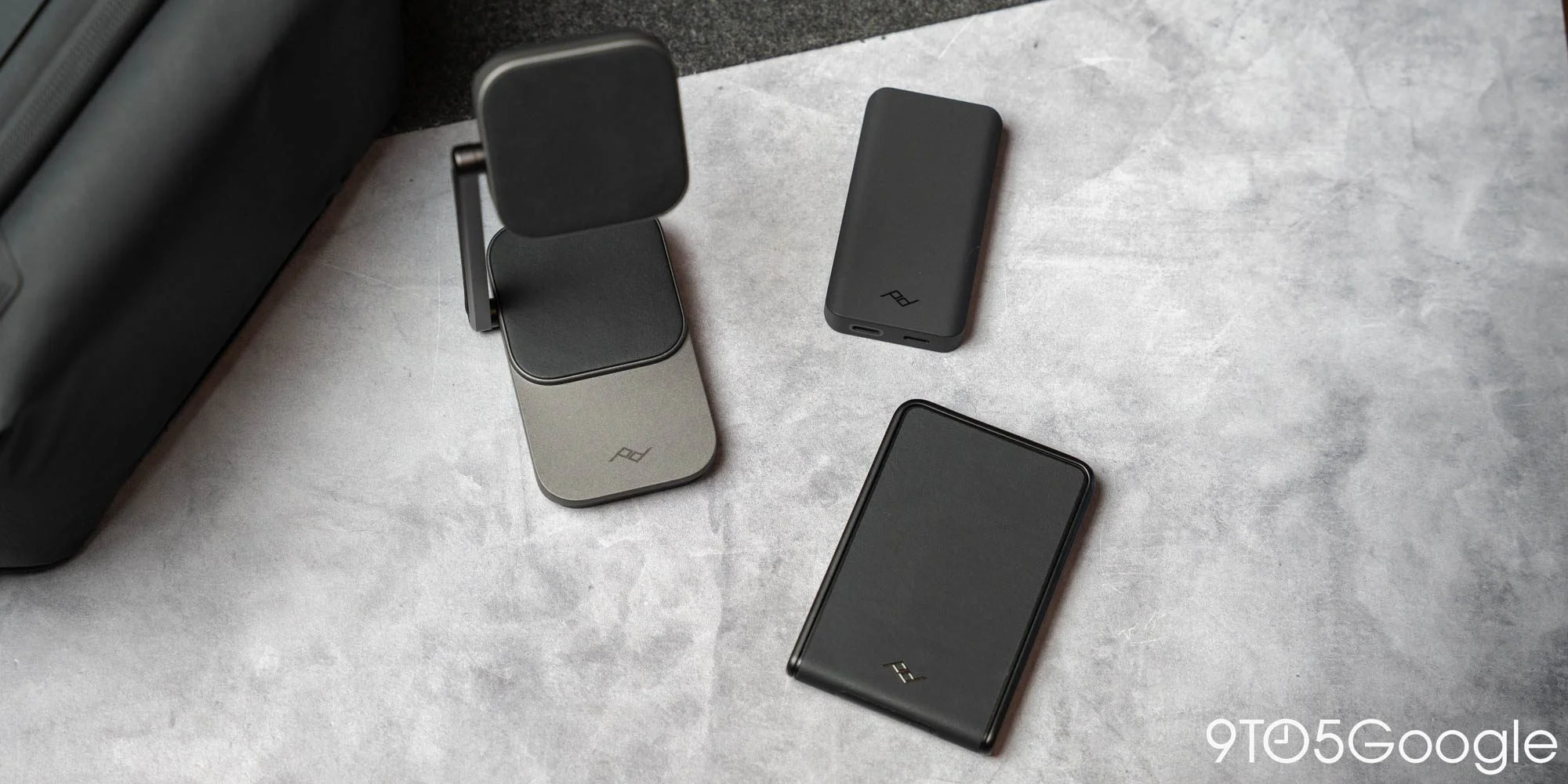
Peak Design’s latest charging gear targets a familiar travel problem: keeping several devices powered without packing a pile of bulky adapters. The lineup pairs a two-pad wireless charging stand with a compact dual-port wall charger and a battery that includes its own kickstand. The idea is straightforward, but the products work best as a kit only if you pay attention to how their power requirements fit together.
Two Qi2 pads in an adjustable stand
The 2-in-1 Mobile Charging Station is the lineup’s most ambitious product. Each of its two wireless pads supports Qi2 charging at up to 25W, allowing two compatible devices to charge at full speed at once. That makes the stand useful for a phone and another compatible device, or for two phones when you’d rather avoid a tangle of cables. Its adjustable design can lie flat or prop up for viewing, while the aluminum base, stem and top cradle give it a more substantial feel than a basic pad.
The stand’s layout also reflects a tradeoff: it occupies more space than a single wireless charger, but gives that space a second job as a viewing stand. That can matter on a hotel desk or bedside table where chargers, cables and devices compete for room. The design sounds more suited to a dedicated spot than to slipping into a pocket, though its travel appeal comes from replacing multiple charging positions with one unit.
A recessed USB-C port connects the stand to a power adapter, which isn’t included. There’s also a second USB-C output for a wired device, so the stand can serve as a small charging hub when you’ve brought the right adapter and cable. Peak Design recommends at least a 75W adapter and cable to run both wireless pads at full power; the box includes a 100W cable. A 65W adapter can supply 25W to one pad, while the stated minimum input for charging is 45W.
Those distinctions matter more than the headline speed. A buyer who already carries a suitable high-wattage adapter may be able to add the stand without changing much else, while someone traveling with a smaller charger could find that the two-pad promise comes with a separate packing requirement. The product’s flexibility depends on the power source behind it.
That requirement shapes which travel setup makes sense. The stand’s $99.95 price buys two fast wireless charging positions, but getting their full output means bringing a sufficiently powerful adapter. For one phone, the 65W option may be enough. This is more significant than it looks: the stand’s advertised capacity is only part of the decision, because the adapter you own determines how much of that capacity you can use.
A small charger and a battery for travel
Peak Design’s slim 65W charger has two USB-C ports, though only one can deliver 65W on its own. With both ports occupied, output is split as either 30W/30W or 45W/20W. That’s a useful arrangement for a laptop and phone, with the tradeoff that neither device gets the full single-port output at the same time. The charger costs $64.95.
The split makes this a charger for managing more than one device, rather than a way to give both ports their maximum possible power simultaneously. If you’re working in this space, the practical question is what you tend to charge together: a laptop that can accept a lower rate alongside a phone may fit the arrangement, while two demanding devices could require different expectations. The slim form is appealing for travel, but port count alone doesn’t tell you how quickly a particular pair of devices will charge.
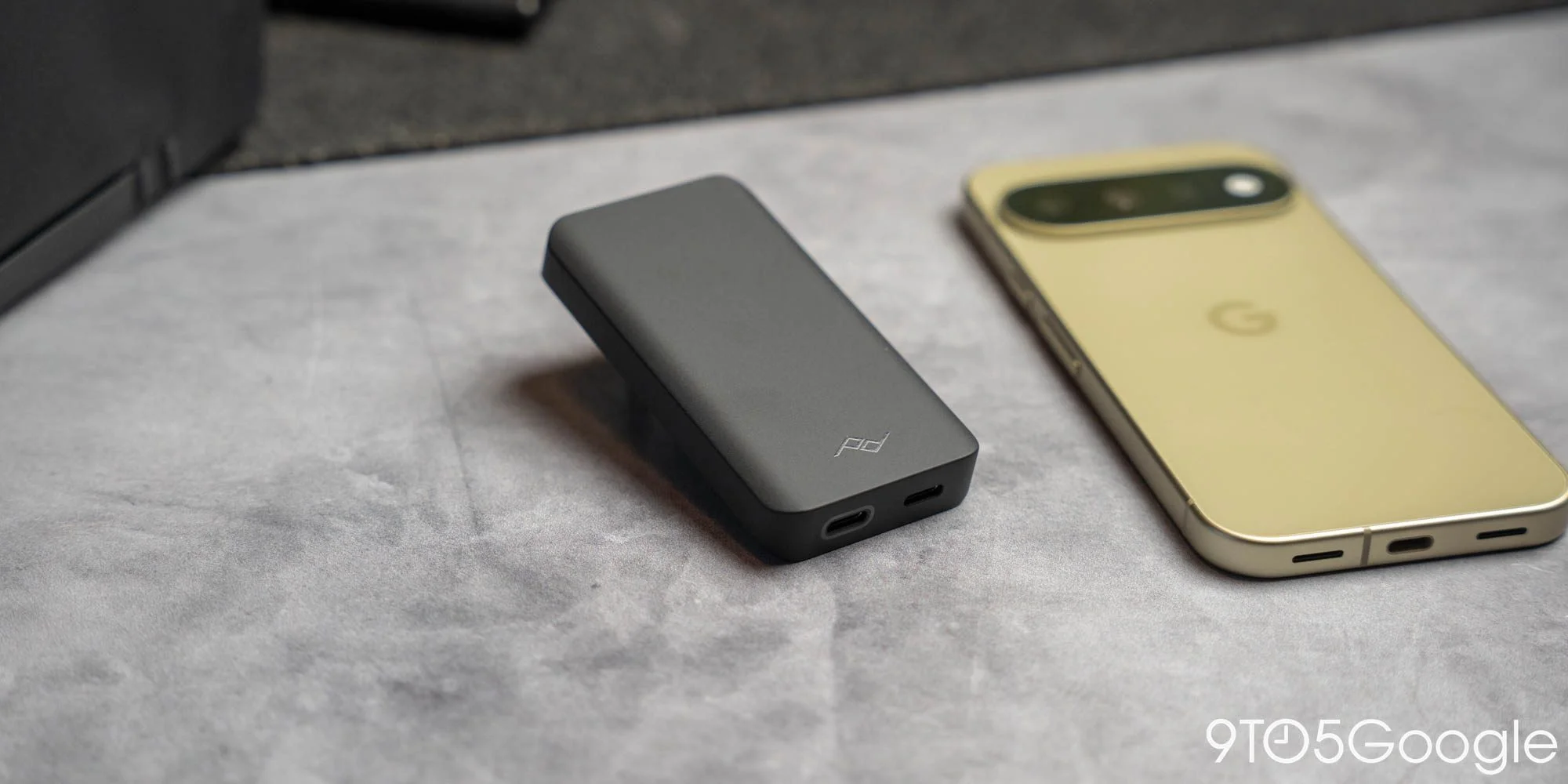
The Qi2 Kickstand Travel Battery also supports wireless charging up to 25W and holds 5,000mAh. Its folding kickstand wraps around the battery as a protective frame, adding some bulk compared with slimmer power banks. That added structure is a deliberate compromise: it gives the battery a viewing function while making it less minimal as a backup power source. The design still feels manageable, and the faux leather finish on both sides, lower-edge status lights and stable fit on a Pixel 11 make it comfortable to use.
A built-in stand can be handy when you’re watching or checking a screen while charging, especially away from a desk. But the 5,000mAh capacity and wireless charging focus make the product’s appeal specific: it’s a portable charging accessory with a stand, rather than a high-capacity battery aimed at powering devices for an extended stretch. The frame may protect the battery in a bag, but it also takes up room that a simpler design could avoid.
The battery costs $99.95, matching the charging stand. Both products sit in premium territory, so the value depends on whether their particular features solve a daily need: two full-speed charging pads, or a wireless battery that doubles as a stand. If those features would otherwise require separate accessories, the price may be easier to justify; if you mostly need a basic power bank or single-device charger, the extras may not earn their keep.
What the lineup means for frequent travelers
Peak Design first previewed the accessories at CES last year. The three products now make a coherent travel kit, but each asks buyers to think about power delivery: the stand needs a suitably rated adapter, and the wall charger divides its output when both ports are in use. The battery adds a different kind of convenience, with its kickstand and wireless charging built around occasional use away from a table.
Here’s the thing: these products are easiest to assess as parts of a real packing routine. A traveler carrying a laptop, phone and another compatible device could value the stand’s two pads and the charger’s two ports, but still needs to check whether the adapter can meet the stand’s requirements. And yet, the collection’s appeal isn’t limited to carrying all three products; each can solve a distinct problem on its own.
The numbers on the box are only the starting point. Port sharing, adapter capacity and the stand’s minimum input all affect what you’ll get in practice (and this is the part most people overlook). Convenient, with conditions.
For frequent travelers, those details matter as much as the charging speeds printed on the box. What this means for you is that the best choice depends on the devices you carry and the charger you already own. The lineup offers useful combinations, but the prices and power requirements reward buyers who know exactly which charging problem they’re trying to solve.
Discussion
Sign in to join the discussion.