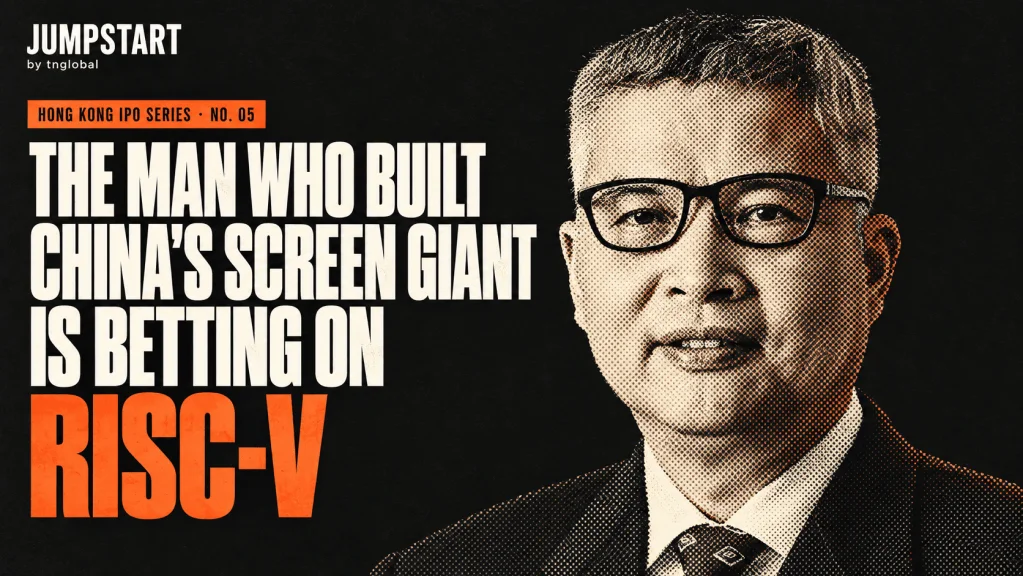
Wang Dongsheng's ESWIN Computing pivots to RISC-V chips amid a challenging market, aiming to replicate BOE's success in high-tech manufacturing.
**The Double-Edged Sword of Industrial Drive**
Wang Dongsheng's career arc is a testament to his ability to navigate the cutthroat arena of high-tech manufacturing. In 1993, he laid the groundwork for what would become BOE Technology Group, a display giant that now stands as one of the leading screen manufacturers globally. BOE's panels are behind the displays of countless televisions, smartphones, and laptops, delivering images to viewers without many ever knowing the name of the firm producing them.
After stepping down as chairman in 2019, Wang didn't retreat into retirement. Instead, he embarked on an entirely new venture with ESWIN Computing. This Beijing-based chip manufacturer bets on RISC-V, an open instruction-set architecture that's catching on among developers working on everything from autonomous vehicles to AI-focused projects. Currently, ESWIN is poised to go public in Hong Kong, seeking to raise between HK$1.48 and HK$1.59 per share, with trading anticipated to commence on October 9 under stock code 1256, as detailed in its [prospectus](https://www1.hkexnews.hk/listedco/listconews/sehk/2026/0928/2026092800035.pdf).
While comparisons to BOE abound, caution is warranted. ESWIN’s earnings still largely hinge on display control chips. At this stage, the company is not yet profitable and finds itself heavily dependent on a narrow client base. It's a balancing act of aspirations and current realities, making its public offering more than just a startup story—it's a litmus test for whether Wang can replicate his earlier industrial triumph in a significantly tougher environment.
**The Legacy of BOE: Setting the Stage for ESWIN**
To appreciate ESWIN’s trajectory requires a glance back at Wang's previous endeavors. BOE was established during a time when China was still reliant on foreign tech for display solutions. Wang fought through the complexities of display manufacturing, a process demanding vast capital and precision. In the realm of electronics, establishing scale is critical, especially as the value of panels declines with technological advancements.
Under Wang’s leadership, BOE flourished and carved out a space in the international display market. This rich background shaped his understanding of the tech industry: while individual components matter, the overarching goal lies in assembling a comprehensive platform characterized by talent, IP, and manufacturing prowess.
In 2019, Wang's vision materialized into ESWIN Group, stemmed from the idea of creating a multi-faceted platform. ESWIN's semiconductor operations span various businesses, including chip development and testing—however, its core, ESWIN Computing, operates primarily as a fabless entity, entrusting actual fabrication and packaging to external partners.
Founded in late 2019, the company also created a dedicated research institute to delve into RISC-V architecture and other advanced technologies. While Mi Peng currently holds the reins as CEO, Wang remains closely involved, presiding over strategic decisions as an executive director.
Significantly, ESWIN has not attempted to introduce a single flagship processor but has instead compiled a diversified library, reporting over 620 intellectual property modules as of March 2026. This approach allows them to pitch their strengths to a broader audience—though it also complicates their market positioning amid varied demands.
**RISC-V: The Open Door and Its Challenges**
RISC-V, or “risk five,” is not merely a chip but an open instruction-set architecture (ISA). This architecture provides a groundwork that allows both firms and individual developers to create processors without the hefty fees typically associated with proprietary standards. Its modular nature is appealing, as creators can tailor their designs to specific applications without being locked into a single ecosystem.
However, adopting RISC-V isn’t without its complexities. The architecture might simplify some aspects of chip design, but the surrounding ecosystem—things like software tools, verification processes, and manufacturing capabilities—are essential. The true power of RISC-V will only emerge if developers rally behind the standard, creating a robust support network.
ESWIN aims to bridge the gap between the open standard and tangible devices. By developing RISC-V cores and associated software, they're striving to offer versatile components that resonate with the demands of various applications. Their RISAA development environment highlights this intention, allowing teams to leverage existing modules rather than reinventing the wheel for every new product.
But the success of this model relies heavily on market feedback. If enough customers align with ESWIN's vision, it could achieve meaningful traction; however, the challenge remains significant given the distinct nuances in each market segment.
**Relying on Old Foundations: Current Revenue Streams**
Despite its ambition to innovate with RISC-V, ESWIN remains tethered to its roots in the display industry. A substantial part of its revenue comes from human-machine interaction chips, effortlessly integrated into consumer electronics. This segment alone accounted for a whopping 76.3% of their revenue in 2025, underscoring the existing ties to display technology.
This rich foundation has facilitated ESWIN's engineering growth, providing established customer relationships and insights into market demands. Recently, the company engaged with a prominent monitor manufacturer to mass-produce a RISC-V multimedia controller, indicating a gradual infusion of their new architecture into familiar products.
Yet, this linkage also poses a challenge. While profits are burgeoning in familiar territories, can ESWIN effectively transition from being a display-centric company to a multifaceted computing platform? Their ambition isn't simply to remain a chip supplier but to leverage their existing expertise in broader computing contexts.
**Beyond Displays: Ambitious Extensions into Computing**
Looking towards the future, ESWIN has categorized its growth initiatives into interconnectivity and computing realms. Their interconnectivity products aim to facilitate data transmission across smart devices, while computing products look to provide localized intelligence for applications as diverse as automotive systems and robotics.
Emerging concepts like “embodied intelligence” come into play here, with ESWIN asserting itself in markets driven by real-time data responsiveness. Since 2021, the company has ramped up its focus on edge and automotive solutions, already forging partnerships that point towards a healthy future in these sectors. As of early 2026, computing products accounted for a substantial 13.2% of revenue—a promising but cautious sign of growth potential.
The core question looms large: can ESWIN actually make this multifaceted strategy pay off? While shared architectures may assist in reducing development costs, tailored engineering solutions will still be paramount in catering to individual market needs.
**A Path of Growth Amid Financial Challenges**
Despite its revenue growth, ESWIN's path is laden with financial hurdles. From RMB1.75 billion in 2023, its revenue has modestly climbed to RMB2.43 billion in 2025, yet the company consistently registers heavy losses. Current projections indicate losses may linger into the foreseeable future, driven primarily by an aggressive R&D budget.
The goal of achieving scalability through repeated investments is evident, but the payoff hinges on several interconnected factors. Recent losses have narrowed slightly, hinting at potential operational improvements, but ESWIN is still facing the daunting task of proving that its business model can sustain itself over time.
As it prepares for its Hong Kong IPO, the company aims to secure around HK$2.27 billion in net proceeds. The intended use of these funds—funnelled into R&D, marketing, and platform development—signals a clear intent to bolster its technological infrastructure. Yet, investors must grapple with the reality that they're being asked to support a company still in the throes of establishing a sustainable profit.
**The Double-Edged Reality of Client Concentration**
The dangers of revenue concentration pose another potential pitfall for ESWIN. A staggering 89.5% of their 2025 revenue stemmed from just five customers, with the largest single client contributing 64.6%. As consumer demand fluctuates, this dependency grants significant leverage to their largest customer, allowing for substantial influence over pricing and order timelines.
Although ESWIN’s initial success can be attributed to its understanding of the display market, the challenge will be transitioning to a more diverse client portfolio. High reliance on a few customers can stifle growth and innovation.
Inventory management exacerbates these risks. As they ballooned from RMB328.6 million at the end of 2023 to RMB780.1 million by March 2026, the implications of overestimating demand could lead to costly inventory write-downs.
**The Winter of Transition and a Horizon of Potential**
Wang Dongsheng’s first venture into display technology shifted the industry dynamics. Now, with ESWIN, the focus shifts toward a more integrated approach to computing. RISC-V offers a flexible architecture, but the road ahead is fraught with layers of complexity—from software support to market integration challenges.
With a solid foundation already in place—from existing revenue streams to strategic partnerships—ESWIN has the framework necessary for potential success. It stands at a crossroads of opportunity and significant hurdles that must be navigated thoughtfully.
The Hong Kong listing offers vital capital, but it won't obfuscate the underlying issues the company faces. Ultimately, success hinges on ESWIN's ability to convincingly tell its narrative of scaling a computing platform while promising returns and fostering long-term relationships—an effort that requires deft maneuvering in an industry marked by rapid change and fierce competition.
Discussion
Sign in to join the discussion.