SenseTime's SenseMart OS aims to redefine retail operations by integrating robotics and AI, enabling a highly interactive customer experience.
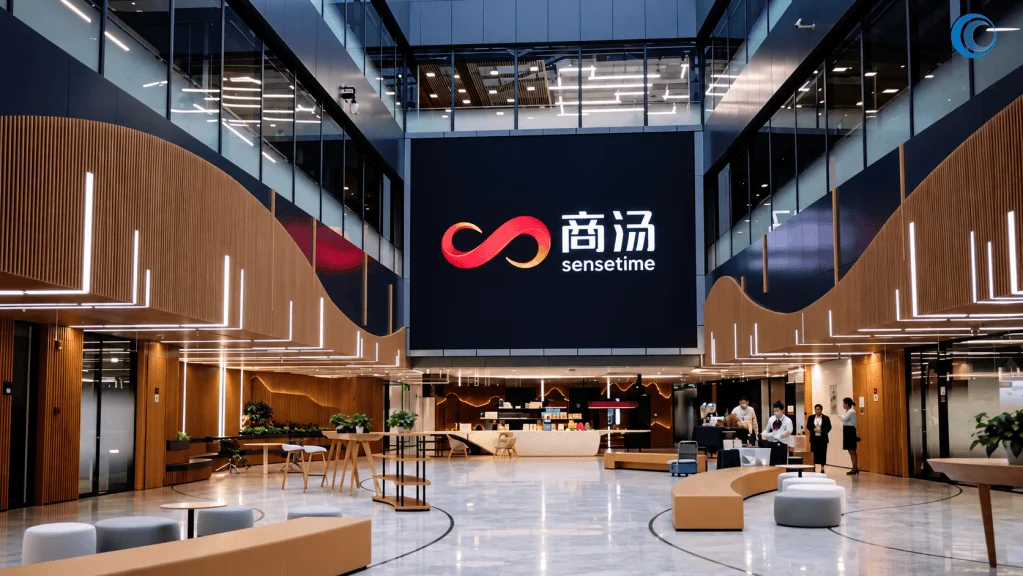
On September 23, SenseTime unveiled its latest innovation, SenseMart OS, at its Shanghai headquarters. This new operating system is geared towards retail environments, aiming to link diverse robots and retail equipment into a cohesive management framework. The opening demonstration featured the SenseMart Go robotic store, showcasing how the OS orchestrates various elements in a practical retail scenario.
Key Significance: SenseMart OS represents a pivotal step in transitioning embodied intelligence from theoretical models to functional systems in retail.
- The introduction of this OS shifts the discussion on embodied intelligence competition, focusing on which elements—robot hardware, datasets, models, or integrated systems—will drive the future.
Retail Expertise: SenseTime boasts extensive experience in the retail sector, with existing product recognition systems managing millions of orders each day. According to Dr. Yi Shuai, the co-founder and chief scientist at SenseTime Smart Retail, the company’s database currently tracks over 300,000 unique stock-keeping units (SKUs).
- In contrast to manufacturing facilities, retail robots must effectively engage with customers, combining perception, interaction, and execution into a single operational flow.
- Retail offers tangible metrics—like sales growth, customer loyalty, and return on investment—that aid in assessing the efficacy of new technology.
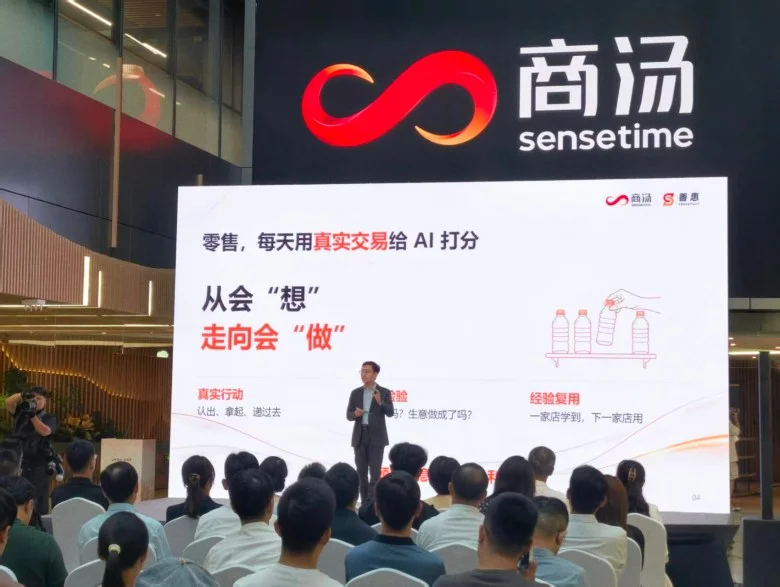
Core Components: Dr. Yi indicated that SenseMart OS centers around three pivotal elements that facilitate four essential capabilities: perception, interaction, decision-making, and execution. The vision extends beyond retail to encompass other offline services.
Focus on Business Impact: Rather than merely achieving operational success with robots, the system prioritizes metrics like customer satisfaction, transaction rates, and the frequency of repeat purchases.
Dynamic Robot Integration: SenseMart OS accommodates various robotic configurations—including wheeled, dual-arm, and humanoid robots—tailored to specific tasks within the retail space.
- Comprehensive Data Integration: The platform fuses visual data with transaction, inventory, and customer interaction metrics to train retail agents, optimizing their performance.
Statistics at a Glance:
- Dr. Yi pointed out that one employee now manages three to five stores, reducing the workforce to approximately 0.2–0.3 personnel per location.
- Robots in this system can operate for six hours on a single charge, typically requiring recharging twice a day. They prioritize customer service, even while docked for charging.
- Successful store locations in Shanghai can reach profitability within six to twelve months; other average performances take about a year to break even.
- Each store is designed to hold around 150–200 SKUs, which is notably lower than a small convenience store’s full range of products.
Expansion Potential:
- SenseMart OS shows adaptability by learning new operational skills each week and implementing these across existing and future store locations.
- The time needed to configure a new store has dramatically decreased from several months to just one or two weeks.
- Standardized setups can commence operations as soon as the following day after installation, based on Dr. Yi's insights.
Real-World Implementation: The SenseMart Go initiative is currently operational in over 20 locations, including cities like Shanghai, Hefei, Shenzhen, and Qingdao, within various settings such as campuses, malls, and public events.
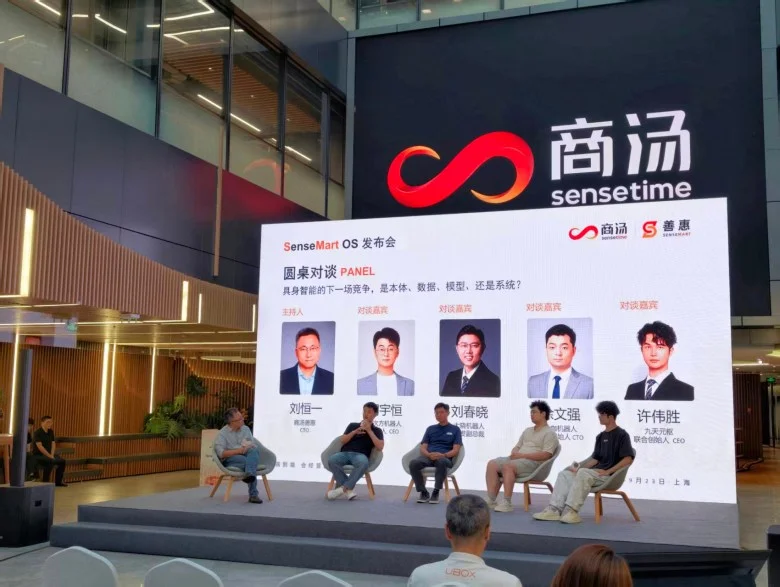
Future Considerations: Panelists at the event shared insights on where the next stage of value creation in embodied intelligence might manifest.
- Industry Insights: Dr. Yi suggested that the sector's value will increasingly shift towards optimizing upstream supply chains and leveraging downstream expertise.
- System Importance: Weisheng Xu emphasized the necessity of making embodied intelligence applicable in everyday settings, advocating for operational systems to bridge theoretical frameworks to real-world situations.
- Data Utilization: Min Yuheng highlighted the significance of practical robot deployments in enhancing data quality and model performance, reinforcing the importance of operational experiences.
Discussion
Sign in to join the discussion.