Huawei’s Mate 90 series introduces upgraded Kirin chips and focused AI capabilities, enhancing performance, camera technology, and user experience.
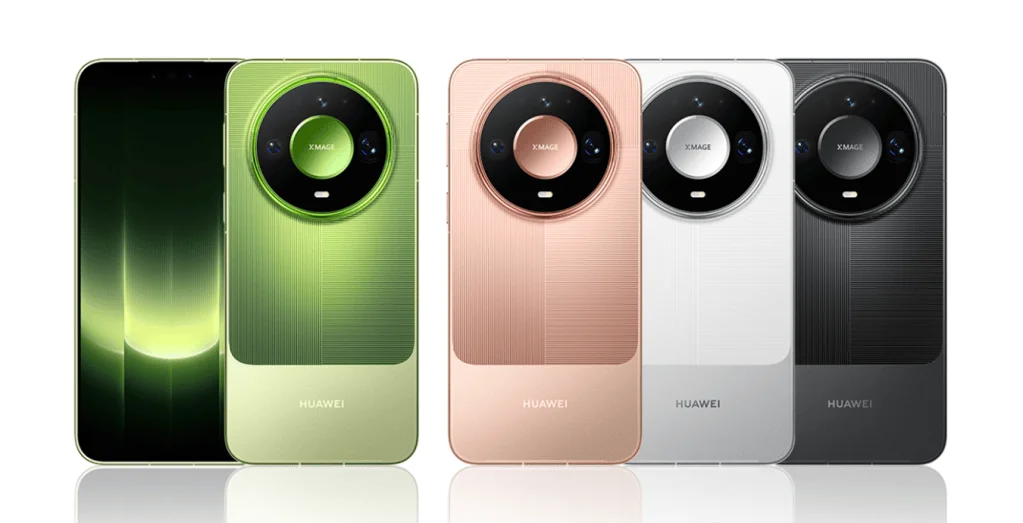
Huawei has officially unveiled its Mate 90 series during a launch event in Shanghai, showcasing five distinct models: the Mate 90, Mate 90 Pro, Mate 90 Pro Max, Mate 90 Pro Max Collector’s Edition, and Mate 90 RS Ultimate Design. The pricing for these models ranges from RMB 5,999 (approximately $895) to RMB 12,999 (around $1,939).
The series' standout features revolve around advancements in processing power, display quality, camera enhancements, connectivity, and on-device AI capabilities. At the heart of the new Mate lineup are the next-generation Kirin chips, which were a focal point of the launch.
New Kinds of Kirin Chips
The base model, Mate 90, utilizes the Kirin 9030 chip, which purportedly delivers a 27% performance boost over its predecessor, the Mate 80. Moving up the line, the Mate 90 Pro is powered by the Kirin 9035, with a design that emphasizes a balance between performance and energy efficiency, achieving an 18% battery life improvement over earlier models.
The premium Mate 90 Pro Max and its superior variants employ the Kirin 9050 Pro. This chip introduces a novel logical folding architecture, enabling 5 million signal transmission paths and an impressive inter-die bandwidth of 125 TB per second. Overall device performance is claimed to be 31% superior to the last generation, with on-device AI computing capabilities reportedly doubling.
Display and Durability Enhancements
Display improvements include the introduction of second-generation Linglong displays in the Mate 90 Pro and higher models. These displays can achieve peak brightness levels of up to 12,000 nits at a 1% area average, enhancing visual clarity.
The Pro Max and RS Ultimate Design variants boast full-color Linglong displays with BT.2020 color reproduction, catering not only to general users but also appealing to content creators needing superior color fidelity and brightness.
From a protection standpoint, all models incorporate third-generation Xuanwu strengthened Kunlun Glass, with optical Kunlun Glass specifically for camera covers in the Pro and advanced models, boasting a 20-fold increase in drop resistance compared to their predecessors. All variants also carry an IP68 rating for dust and water resistance, while Pro models further achieve an IP69 standard for high-temperature, high-pressure water conditions.
Camera Improvements and Imaging Capabilities
Every model in the Mate 90 series features Huawei’s third-generation Red Maple primary-color camera system, claim to achieve a 37% improvement in global color accuracy and a 62% enhancement in skin-tone reproduction for portraits. The Mate 90 Pro Max elevates these advancements with an 18-stop high-dynamic-range main camera coupled with a 200-megapixel telephoto camera, offering stabilization rated at CIPA 7.5. This model's imaging capabilities target common competitive attributes in smartphone photography, including color accuracy, dynamic range, telephoto functionality, and stabilization in low-light scenarios.
Connectivity and On-Device AI Features
In terms of connectivity, the Mate 90 series employs an integrated antenna architecture that enhances signal strength by 2 dB, improving stability in challenging environments. Notably, the Mate 90 Pro Max accommodates four SIM cards, allowing for three active connections simultaneously.
As for artificial intelligence, advanced models like the Mate 90 Pro Max feature a 30-billion-parameter MoE multimodal on-device model. This new architecture includes features such as Xiaoyi Call 2.0, Xiaoyi Gallery Assistant, and Xiaoyi Navigation Bar. Unlike traditional services that rely heavily on cloud computing, the on-device model can perform various tasks directly on the smartphone, offering greater flexibility without needing constant internet access. However, the actual performance may vary based on model capabilities and specific scenarios.
Strategic Focus on Multi-Model Variants
The Mate 90 series continues Huawei’s strategy of offering multiple models, each optimized with distinct chips, displays, and camera systems to cater to a wide spectrum of price points. This generation notably blends the new Kirin chips with on-device AI, enabling larger model deployments directly on smartphones. As AI capabilities evolve, smartphone manufacturers are transitioning towards more robust on-device applications rather than merely enhancing existing software solutions.
Ultimately, the effectiveness of these hardware and AI advancements in everyday usage will become clearer with hands-on experience and extended analysis over time.
Discussion
Sign in to join the discussion.