The 2026 FIFA World Cup poses unique security challenges, blending physical and cyber threats that demand a coordinated response from public safety officials.

Security Challenges Ahead of the 2026 FIFA World Cup
Beginning tomorrow, the excitement of the 2026 FIFA World Cup will draw millions across sixteen cities in the U.S., Canada, and Mexico. However, this event's immense scale introduces a host of security concerns that require comprehensive preparation. Such a major international tournament is not just a showcase of athletic prowess; it's also a magnet for security threats spanning multiple domains. This blend of physical presence and digital engagement creates a unique challenge for security agencies, event organizers, and governments.
Cyber and Physical Threats
The high-profile nature of the tournament undoubtedly attracts various threat actors. Cybercriminals are already active, capitalizing on the event with fraudulent domains and deceptive online stores aimed at unsuspecting fans. Similar past occurrences at large events suggest that entering the digital environment of the World Cup will be perilous for many. Attendees could easily fall victim to phishing schemes or identity theft as cybercriminals exploit their heightened excitement and eagerness to secure tickets or merchandise. Moreover, we can expect hacktivists to utilize the event's visibility to push political agendas or instigate disruptions. This could manifest in anything from website outages to coordinated social media campaigns that aim to hijack the narrative surrounding the World Cup.
What does this mean? Put simply, the digital front is often as critical as the physical defenses. While the tournament will highlight elite athletic talent, it will also provide a platform for malicious actors. With millions of fans eager to engage, the potential for disruptions, whether via DDoS attacks or the spread of misinformation, is significant. The online market for tickets, merchandise, and related goods is a ripe target. Consumers looking for deals or last-minute options are likely to stumble upon sites that are anything but legitimate.
Coordinated Response Required
Public safety officials are tasked with addressing both physical security hazards—like managing large crowds and mitigating risks at transportation hubs—and the inherent cyber threats tied to this global event. Previous high-profile events have shown that the complexities associated with coordinating security across diverse jurisdictions can often lead to gaps in preparedness. This necessitates a collaborative approach that spans public safety, cybersecurity, legal teams, and communication strategies to effectively navigate the complex risk landscape. Ensuring all stakeholders are aligned on policy and tactics is essential; a misstep could result in chaos both in arenas and online.
Managing crowds is a well-understood domain, with protocols from past World Cups providing a framework. Yet, the unique nature of this year's collaboration across three countries adds layers of complexity. Each country will have its own security protocols, local threats to address, and public expectations to manage. The continuous dialogue will be crucial as authorities will need to adjust in real time to emerging threats, both online and offline.
Threat Trends and Historical Context
In assessing security risks in event planning, an understanding of historical precedents serves as a reminder of potential vulnerabilities. The 2022 FIFA World Cup, held in Qatar, highlighted the extensive measures taken to counteract threats in a politically charged climate. Security incidents at the 2016 Rio Olympics provide another sobering case study, where security mishaps underscored the need for vigilance across both physical and digital realms. Taking lessons from these past occurrences can bolster security measures in 2026, but they also demonstrate the constant evolution of potential threats. The rapid digitization of sports events means that any lapse can have immediate consequences, compounded by the sheer number of people involved.
There's also a growing issue with insider threats. Although rare, rogue employees in any security context can jeopardize the safety of the event. Security personnel need rigorous vetting and continuous monitoring, particularly in high-stakes environments like international competitions. The interplay of conventional security with cybersecurity adds a new layer of complexity; if you’re in a position where you’ve got to ensure safety, you can’t afford to overlook potential vulnerabilities.
Implications and Future Outlook
As the clock ticks down to the kick-off, the implications for fans, sponsors, and governments are profound. For attendees, awareness is key; recognizing the security landscape means they'll be better equipped to avoid pitfalls. Fan engagement must also be addressed through public information campaigns that clearly communicate how to avoid scams and where to report suspicious activity. If you're working in this space, take note: the onus falls not only on organizers but also on fans themselves to maintain awareness.
For governments, effective collaboration and interoperability between security forces across borders can set a precedent for future events. Achieving this requires consistent dialogues that transcend mere event coordination and foster ongoing security partnerships. This isn’t just about the World Cup—it's about setting a standard for all international events that gather large crowds.
Looking ahead, as the world becomes increasingly interconnected, the intersection of digital and physical security will only gain importance. With rising cyber threats and the sophistication of attackers improving, the security strategies employed during the FIFA World Cup may offer insights for various sectors beyond sports. Monitoring and responding to emerging threats becomes an ongoing process, one that organizers must prepare for long before any whistle blows.
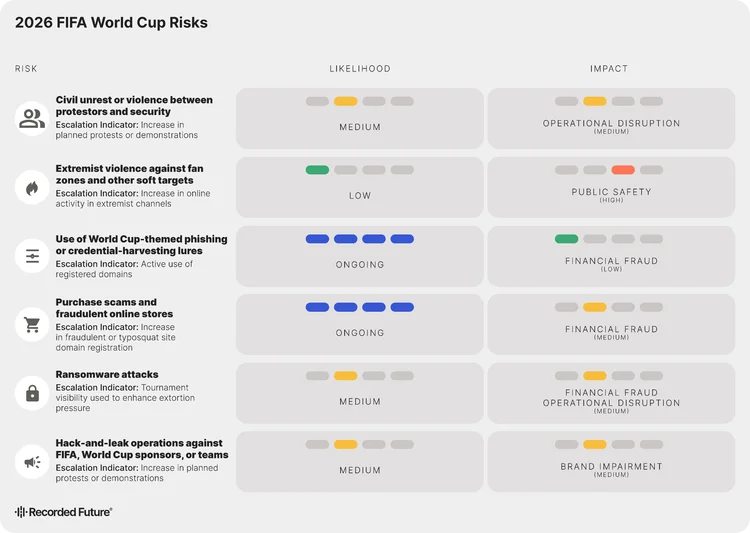
Figure 1: Assessment of physical, cyber, and fraud risks affecting the 2026 FIFA World Cup
(Source: Recorded Future)
Discussion
Sign in to join the discussion.