Recorded Future's move to downtown Boston marks a significant step in its evolution, enhancing its presence in the tech startup scene and accommodating its rapid growth.

Founded by Swedish visionaries, Recorded Future has become a significant player in the Boston tech scene, with its headquarters evolving alongside the company’s expanding vision. Initially set in Somerville, Massachusetts, the company's original office was an old laundromat; now, after twelve years, they’ve relocated to Post Office Square in downtown Boston, signaling a new chapter.

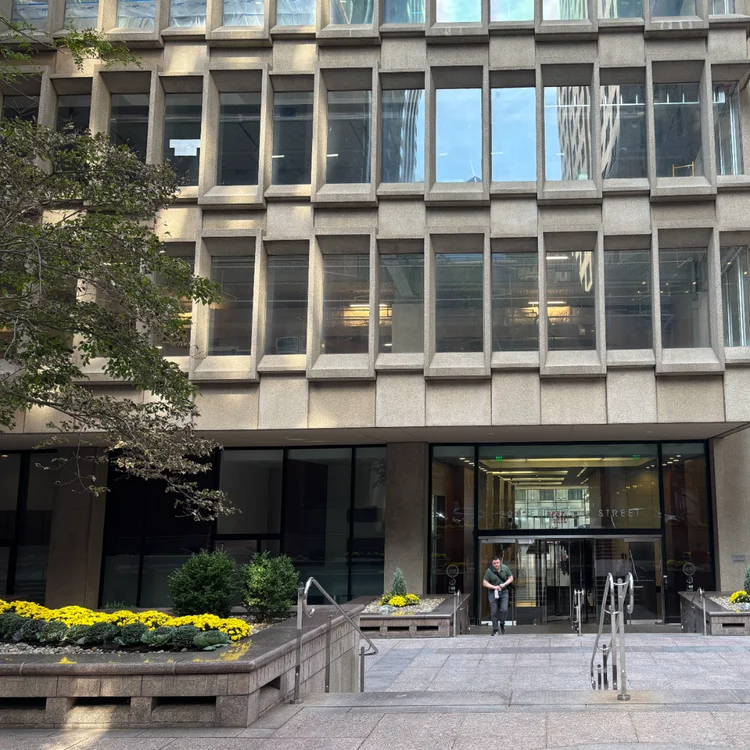
Somerville Office laundromat sign | Boston Office (Current) on Franklin Street
The new location is a hub for essential functions like customer success, security, data engineering, product, and marketing. Nearly 200 employees now call this Boston office home, with many others traveling for critical meetings and strategic sessions.
Lacey Maddalena
Global Office Operations & Facilities Director
Lisa Cefalo
Senior Vice President, Controller
The Evolution of Recorded Future
Established in a world where data is increasingly becoming the currency of business, Recorded Future has carved out a niche in threat intelligence. The company specializes in leveraging machine learning and natural language processing to analyze vast amounts of data from the web. This enables organizations to understand potential threats and risks before they become pressing issues. The move from Somerville to a more modern and spacious office in downtown Boston reflects not just a change in geography but a substantial growth trajectory.
The Significance of Headquarters Relocation
Moving to Post Office Square serves as a strategic decision. The downtown Boston area is a bustling center for technology and finance, providing greater access to talent, partners, and clients. This transition isn't merely about a change in scenery; it's about positioning Recorded Future as a leading entity in the tech sector. The office's design supports collaborative working, which is increasingly important as teamwork continues to define modern business practices.
For many businesses, relocating to prime premises is often a prerequisite for expansion. It’s a space that reflects company values and ambitions. The bustling energy of downtown Boston can foster a culture of innovation, providing employees with an environment that encourages creativity. And yet, maintaining a balance between a fast-paced environment and employee well-being is crucial. If you’re working in this space, you know the blend of productivity and positive atmosphere matters a lot.
Team Growth and Structure
Recorded Future's employment numbers paint a compelling story. Starting with a relatively small team, the company has expanded rapidly to include over 1,000 employees globally, with around 200 of them based in Boston alone. This rapid growth indicates not only the scalability of their operations but also the increasing demand for their services in cybersecurity and risk assessment.
The structure of teams has evolved significantly, as indicated by Lacey Maddalena and Lisa Cefalo's insights. Gone are the days when tasks were handled by individuals or small teams; now, departments are more specialized and staffed. This growth raises questions about how the company maintains its culture and agility as it scales. Ensuring that new hires fit into the established culture while also bringing fresh perspectives is a delicate balancing act.
The Competitive Edge of Recorded Future
Within the intelligence space, Recorded Future competes against some established giants as well as innovative startups. They differentiate themselves with the speed and accuracy of their threat detection and analysis. Similar systems typically rely heavily on historical data or structured inputs, but Recorded Future’s real-time analysis gives its clients an edge in an increasingly complex digital landscape.
But what happens when competitors rise? The need for continuous improvement and adaptation is essential—after all, the cybersecurity domain is rife with threats that evolve almost daily. With a database that aggregates and analyzes both structured and unstructured data from diverse sources, they're one step ahead in the data race. Their approach not only keeps clients alert but transforms how organizations anticipate risks.
Implications and Future Outlook
This relocation and expansion come at a pivotal moment for Recorded Future, but such growth poses significant implications as well. The reliance on data for cybersecurity will only intensify. As we look toward the future, companies that can handle, analyze, and interpret this massive influx of information will define success in tech. Recorded Future seems well-positioned to capitalize on these trends, but complacency isn’t an option.
As they establish themselves in their new office, effective onboarding and mentorship will be vital to leverage the talent growth they’ve experienced. Integrating new employees into a cohesive unit while navigating the complexities of a larger company is a challenge many fast-growing firms face. If the company can maintain its nimbleness while scaling operations, it might not just thrive but also set benchmarks for others in the sector.
The Final Thoughts
The shift from a laundromat to a sleek office space in a tech hub is more than a physical change; it's symbolic of Recorded Future's aspirations. It reflects a commitment to growth, innovation, and excellence in the increasingly critical realm of cybersecurity. For stakeholders, employees, and clients alike, this transition could be a harbinger of significant developments in the fight against digital threats.
Discussion
Sign in to join the discussion.