RoboTechnik is pivoting to optical communications' precision manufacturing, enhancing AI infrastructure with their upcoming Hong Kong IPO.
Editor's note: This article is republished from Jumpstart, a TechNode Group publication.
The race to enhance artificial intelligence capabilities isn't just about improving processing chips; it’s also about the critical infrastructure that connects them. As AI algorithms grow more complex, the systems that run them must scale both in computational power and data throughput. This dual demand places a spotlight on optical communication technologies—a field where light, quite literally, plays a vital role.
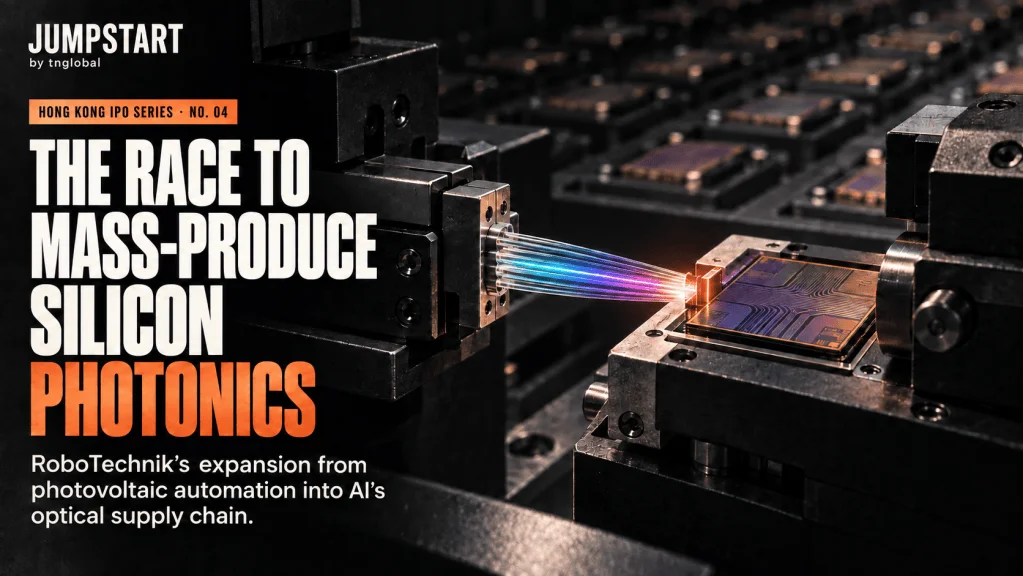
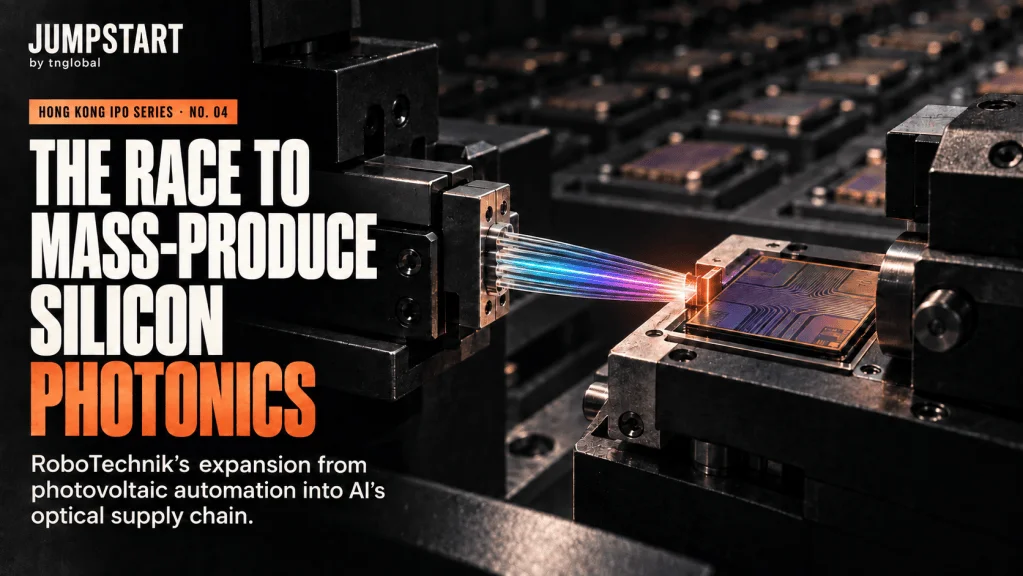
Optical data transmission offers significant advantages. It enables higher data rates across substantial distances while minimizing power loss that often hampers traditional electrical links. However, the complexity in manufacturing the requisite components—such as optical fibers, lasers, and photonic chips—cannot be overstated. Each component needs meticulous precision during assembly, often demanding repeated testing and validation during production. What works in theory or in a lab does not always translate to mass production, which is why companies like RoboTechnik Intelligent Technology are stepping up to fill this critical gap.
RoboTechnik’s Mission
Based in Suzhou, RoboTechnik is geared up for a significant milestone: the public listing of H shares in Hong Kong under stock code 3757 on September 29. The company aims to raise around HK$4.96 billion by offering 11.88 million shares at a target price of HK$436 each, as detailed in their Hong Kong prospectus.
This IPO comes at a transformative time for RoboTechnik, which has shifted from supplying automation for photovoltaic cell factories to focusing on machines for silicon photonics assembly and testing, especially after acquiring the German company ficonTEC. This isn't merely a pivot; it's a crucial test to see if expertise gained in one precision manufacturing domain can successfully transfer to another, alongside a Chinese company's ability to harness specialized German engineering for mass production efficiency.
Origins and Automation Expertise
Founded in 2011 by Dai Jun, RoboTechnik’s roots lie in China's burgeoning advanced manufacturing sector. Early on, the company carved a niche by providing automation solutions—loading, unloading, inspecting, and sorting delicate silicon wafers in photovoltaic manufacturing environments. While these processes may seem secondary to the chemistry behind cell efficiency, they are fundamentally important for operational speed and material conservation.
RoboTechnik gained traction quickly, developing its first automated PECVD system within a year and exploring intelligent-factory systems shortly after. By 2019, the company was listed on Shenzhen’s ChiNext board, primarily thriving on the demand dictated by capital spending from solar manufacturers—though this specialization would soon turn into a liability as the market cooled.
Branching Out into Photonics
Long before the solar industry's downturn fully unfolded, RoboTechnik began eyeing diversification. In 2019, doors opened to acquire ficonTEC, a niche player with a solid foothold in automated photonic assembly and testing. FiconTEC specializes in precisely handling photonic components, including the intricate tasks of fiber attachment and optical pathway alignment. This German acquisition was strategic, connecting the dots between solar automation and photonic assembly, both of which rely on engineering precision and swift motion control.
Completing the acquisition involved navigating complex regulatory landscapes over six years. RoboTechnik eventually secured a 93.03% stake, bringing ficonTEC fully under its guidance as a wholly owned subsidiary by May 2025. The transition not only added value in photonics knowledge but also birthed a combined expertise that bridges two vital manufacturing fields.
The Need for Specialized Machinery
Why invest in silicon photonics at this juncture? The tech is community-shifting, allowing data transmission via light, which can support the growing demands of AI data centers seeking efficient solutions to rapidly escalating data traffic. While optical links are already critical in interconnecting servers and switches, technologies like co-packaged optics and optical circuit switching represent the forefront of innovation in reducing the energy footprint of data centers.
However, translating these cutting-edge designs into mass production requires highly specialized and precise manufacturing equipment. FiconTEC excels in this arena, providing the machinery needed to align and attach photonic elements with extreme accuracy. Their products include equipment for assembly and testing, supported by proprietary software that synchronizes the necessary processes.
This unique position situates RoboTechnik in an intriguing area of the technology economy, where demands aren't just for advancements in semiconductor design but also for the foundational technologies that support their performance—making it critical for RoboTechnik to deliver these essential tools reliably.
A Rapidly Changing Financial Landscape
The shift in RoboTechnik's focus has manifested starkly in its financial results. The company, which once derived nearly all its revenue from photovoltaic automation, has seen remarkable growth in its silicon-photonics segment within just two years. Revenue from its traditional solar manufacturing solutions plummeted from RMB1.49 billion in 2023 to just RMB433.1 million by 2025. Meanwhile, revenue from silicon-photonics surged from a mere RMB50.2 million in 2024 to RMB439.1 million by 2025—marking a significant shift in the company’s economic landscape.
In the first half of 2026, RoboTechnik reported a stunning 145.1% increase in overall revenue compared to the previous year, driven largely by its newfound silicon-photonics focus. However, the drastic transition is not without complications. Despite returning to profit in 2026, the company’s reliance on project completion and customer acceptance creates volatility in revenue recognition—a hurdle that could impact future financial performance.
Integrating Two Manufacturing Philosophies
The blend of RoboTechnik's mass-production capabilities with ficonTEC's meticulous engineering acumen presents a robust strategy, yet not without obstacles. Successfully merging two distinct manufacturing philosophies requires finesse: nurturing ficonTEC's technical prowess while scaling operations efficiently in line with Chinese manufacturing capacities. They’ve captured 20.5% of the global market for intelligent silicon-photonics equipment, but integrating these two companies' cultures and processes presents a formidable challenge.
This challenge extends to customer relationships and project management. In 2026, a significant portion of their revenue came from a handful of clients, raising the stakes for performance and satisfaction. Any delays in securing project approvals could be detrimental, underscoring the need for quality and stability in executing production plans if they are to capture the burgeoning market demand rapidly.
As RoboTechnik approaches its IPO, it’s not just about securing capital; it’s about strategic investment in its future. They are set to pave the way for a new class of manufacturing machinery that balances high precision with the scalability required for the silicon photonics fueled by AI. The road ahead will be complex, but if they navigate it correctly, RoboTechnik could redefine the bounds of what is achievable in the intersection of automation and photonics.
Discussion
Sign in to join the discussion.