Recorded Future's new AI Infrastructure Indicator Lists empower security teams to monitor and control AI-related network activity effectively.

Recorded Future has unveiled its AI Infrastructure Indicator Lists, a set of curated datasets designed to aid security teams in identifying, monitoring, and managing controls for AI-related network traffic. Available for free to customers with a Cyber Operations license, these lists are a strategic response to rising concerns around unsanctioned AI tool usage. This move signals a shift in how organizations are adapting to the complexities introduced by AI technologies.
As artificial intelligence becomes more embedded within corporate environments, organizations face unique challenges, particularly in dealing with shadow AI—tools that employees use without official sanction. This unregulated usage can lead to data exposure and creates risks that existing security controls might miss. The time for a proactive approach is now. The potential fallout from unsanctioned AI could be significant—think sensitive data leaks or compliance breaches—but many businesses often underestimate this risk, opting instead for a reactive stance on security.
Challenges of AI Integration in Security
The surging prevalence of AI applications has contributed to what some term "security debt," a concept reflecting the growing gap between potential risks and the capacity of security teams to manage them. As companies rush to integrate AI for efficiency and innovation, they often neglect the accompanying security ramifications. Many organizations are grappling with these risks while prioritizing immediate threats, resulting in blind spots in their AI governance strategies that can lead to dire consequences.
Take the rapid rise of agentic AI, for instance. Such systems are quickly being deployed across various interconnected platforms, increasing vulnerability to cyber threats that didn’t exist until they entered the scene. Employees often discover AI tools on social media and integrate them into their workflows without any organizational oversight. A notable example from earlier this year is the viral adoption of OpenClaw, a free open-source AI assistant, which took off with minimal security evaluation. User convenience often trumps security assessments in such scenarios, with serious implications for data integrity and privacy.
This trend isn't just about individual risks; it's systemic. By 2027, projections indicate that around 75% of employees might use or develop technology outside the purview of IT governance. If you're working in this space, this should alarm you. The trend underscores the necessity for security teams to not only recognize what technologies are in use but also to manage access permissions for these autonomous systems similarly to how they do for human operations. Ignoring this could become increasingly risky as employees employ tools without any formal training or understanding of security vulnerabilities.
Features of the AI Infrastructure Indicator Lists
Unlike standard threat feeds that bombard users with a multitude of indicators without context, Recorded Future’s AI Infrastructure Indicator Lists provide a more structured approach. This method allows security teams to concentrate on high-priority risks rather than getting lost in a sea of irrelevant data. These lists are routinely updated and specifically highlight the AI infrastructures utilized by users, developers, and potential adversaries. Each indicator includes valuable data such as IP addresses, CIDR ranges, and domains, complete with their associated Risk Scores and service attribution details.
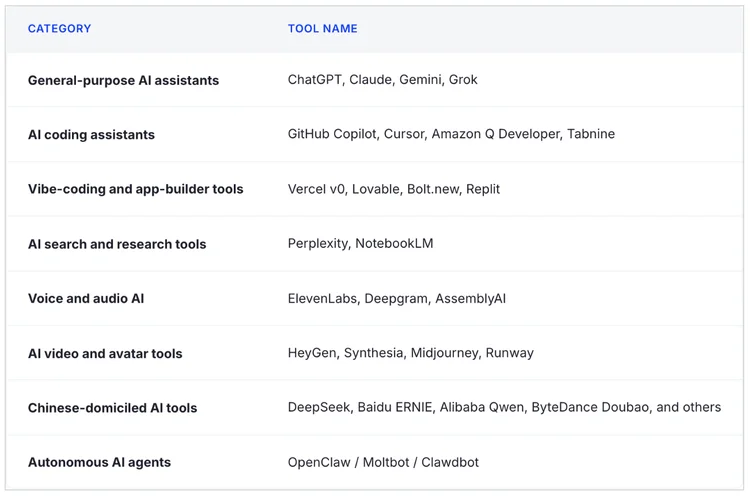
Recorded Future offers two distinct lists: the general AI infrastructure list and a specialized listing for Chinese AI infrastructures. This differentiation is significant, especially considering geopolitical tensions affecting tech supply chains and security paradigms. These lists encompass a wide array of tools, from general-purpose AI assistants and coding aids to voice, video, and autonomous AI agents, creating an essential resource for security teams managing AI technology in their networks. And here's the thing: understanding where these tools are coming from and how they're being integrated can help organizations better tailor their security measures.
Implications and Future Outlook
Adopting tools like Recorded Future’s AI Infrastructure Indicator Lists is a double-edged sword. On one hand, they represent a proactive attempt to manage risks associated with the integration of AI. On the other, they expose how unprepared many organizations are for the wave of shadow AI. This is more significant than it looks. The mere act of creating these lists suggests that organizations recognize the risks but still struggle to implement effective governance around emerging technologies.
As shadow AI becomes more prevalent, businesses will need to rethink their approach to technology management. Organizations can no longer afford to ignore employee-driven innovations. Instead, they must find a way to centralize control while allowing teams the flexibility to use the tools they need. The challenge lies in balancing these two competing interests: security and innovation.
What this means for you, the professional in this field, is clear: preparation is key. Staying ahead of both sanctioned and unsanctioned AI utilization will be paramount. Implementing structured monitoring, governance, and education around AI tools isn’t just a safety measure; it’s essential for long-term viability in a tech landscape where AI's role will continue to expand. Future-proofing your security strategy can no longer be an afterthought; it must be integrated into the very fabric of your organization's operations.
Discussion
Sign in to join the discussion.