Excelland Robotics is transforming automation with tailored robots for specific tasks, striving to meet market demands while expanding beyond China's borders.
Some of the most effective robots in today’s world operate in the shadows, diligently performing tasks that might go unnoticed by the average person. Excelland Robotics is a company that has been crafting this discreet realm of service robots since its inception in Shenzhen in 2013. What began as a focus on robot control systems has evolved into a comprehensive line of commercial service robots designed to operate in hotels, offices, entertainment venues, and public spaces.
As of March 2026, Excelland’s accomplishments are notable, boasting sales of over 114,600 robots to more than 5,100 clients worldwide. This impressive figure highlights the company's strategic ethos: start with a targeted task, build a product around that demand, and gradually adapt the technology to address more complex environments. Rather than relying on a single product, Excelland has developed a versatile portfolio, allowing for specific automation solutions in varied settings.
Initial Steps: Revolutionizing Delivery
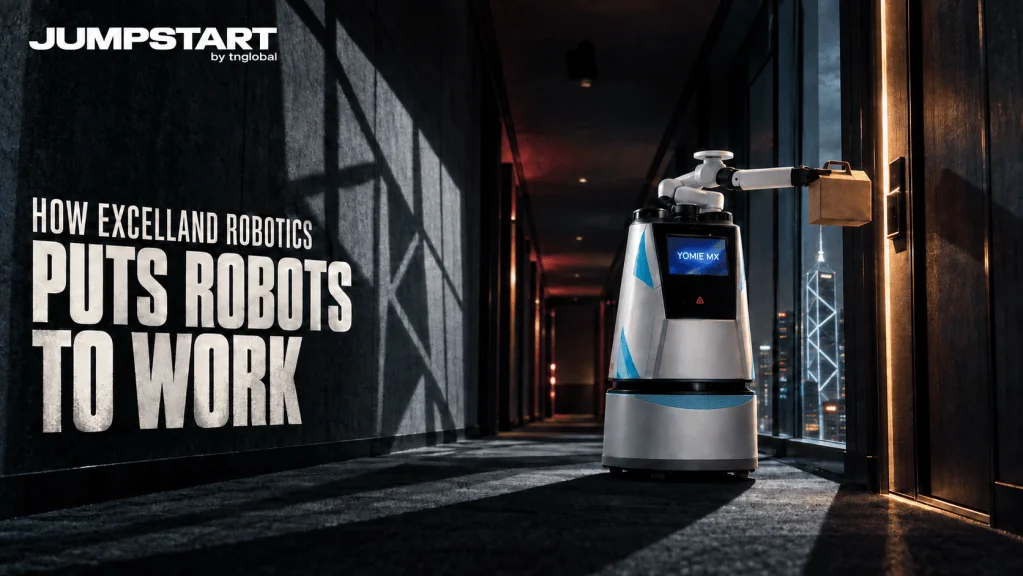
Excelland’s journey into the commercial robotics industry truly gained momentum with the release of Yomie, their indoor delivery robot in 2016. This launch coincided with a significant need among hotels and entertainment venues to alleviate staffing pressures due to higher labor costs and employee turnover. The Yomie didn’t need to replace a full staff member; it simply needed to handle deliveries effectively, freeing up human employees for tasks requiring personal interaction.
Following Yomie, Excelland introduced Yodee in 2017, which catered to higher-capacity delivery needs, particularly in leisure venues. As the years progressed, the 2019 milestone saw cumulative unit shipments surpassing 2,500, and by 2021, that number crossed the 10,000 mark. While these figures may seem modest against broader tech industry benchmarks, the real test for commercial robots lies in their ability to operate consistently in real-world scenarios.
Expanding Boundaries into Diverse Environments
Excelland’s move into indoor cleaning robots in 2022, followed by outdoor models in 2023, marked a significant expansion into more challenging workspaces. Unlike predictable indoor layouts, environments like underground car parks can be unpredictable, presenting hazards such as fluctuating temperatures, vehicle congestion, and other non-static conditions. These complexities demand advanced capabilities in navigation and obstacle avoidance.
Excelland's robots have transitioned from reliance on LiDAR technology to a sophisticated multi-sensor architecture, incorporating cameras and additional sensors to navigate these challenging conditions. The recent Yomie MX model exemplifies this evolution by executing multi-floor deliveries without needing IoT modifications to elevators. This advancement is a culmination of intricate interactions, from recognizing elevator panels to executing the action of pressing buttons.
Integrating Software and Robotics
Excelland's technology ecosystem merges robotics with a powerful cloud-based platform. This architecture separates real-time functions—such as navigation and visual perception—from cloud-based capabilities, including model training and data management. This approach not only fosters a reusable technology framework across different robotic applications but extends to industries beyond robotics through their Yoware platform. This system offers AI vision solutions across sectors like construction and media, facilitating image and video analytics.
In 2025, Excelland reported RMB119.2 million from these AI vision services, making up 37.5% of its total revenue, while robotic product sales tallied RMB135 million. This shift signifies an essential transition from focusing solely on hardware sales toward diversifying into software and service ecosystems that ensure continued customer engagement.
Innovative Relationship Dynamics with Clients
Excelland is redefining how it engages with its clients through a robots-as-a-service model. This strategy allows Excelland to retain ownership of the robotic units and operate them at client locations, charging based on service usage or delivery volumes. This model alleviates upfront costs for customers, making it more enticing for businesses that might hesitate due to equipment expenses. With this arrangement, Excelland maintains accountability for machine performance and customer support while developing a recurring revenue stream.
From 2023 to 2025, Excelland’s revenue increased from RMB243.8 million to RMB317.7 million, illustrating the growing acceptance of their service models. However, challenges persist, including ongoing losses that amounted to RMB110.8 million in 2025. This reflects the high costs associated with maintaining a robotic fleet and the necessity of building out effective service infrastructure.
Charting Future Expansion and Innovation
The robotics dialogue is evolving. Once regarded as strictly service robot manufacturers, companies like Excelland now discuss aspirations in embodied intelligence and complex task execution. The potential to leverage existing data and client satisfaction to guide future developments in robotics stands out as a significant advantage.
Yet, while Excelland has successfully built a footprint in commercial robotics, upcoming challenges include international market expansion. The company has set its sights on markets in Thailand, Japan, and South Korea, having already made strides with robot deployments in these regions. However, entering new markets requires more than localized marketing; compliance with local regulations and service expectations presents considerable hurdles.
With plans to list on the Hong Kong stock exchange as Excelland Robotics (Wuxi) Co. Ltd., the company aims to utilize the IPO proceeds to bolster R&D efforts, sales initiatives, and expand its technological footprint. Their future hinges not just on selling robots but on ensuring that these systems become a staple of modern workplaces. Success will rest on the reliability of their machinery to consistently execute tasks, underscoring the essential role of dependable robotics in reshaping operational efficiency.
Discussion
Sign in to join the discussion.