China's humanoid robot industry is swiftly advancing from impressive demonstrations to real-world applications, focusing on practical uses in various sectors.
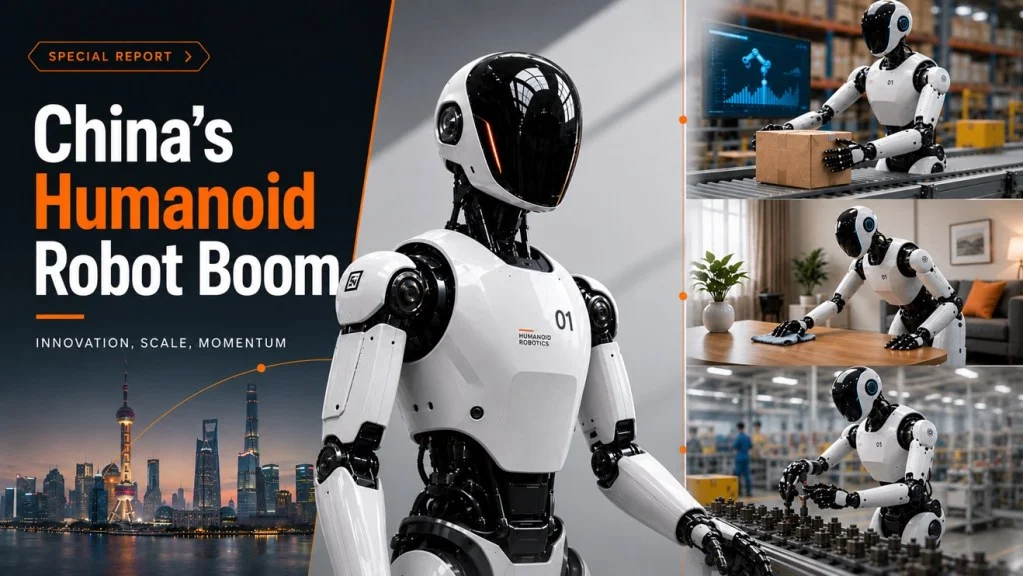
Humanoid robots have captivated audiences with their captivating performances—dancing, flipping, and executing complex routines. However, the current challenge for the industry is how to transition from dazzling demonstrations to practical applications that can function effectively in everyday settings.
China’s humanoid robot sector is at the forefront of this transition, rapidly evolving from showcasing capabilities to commercial deployment. This shift is marked by a focus on integrating robots into workplaces, service industries, and other practical environments, moving beyond mere spectacle.
Chinese firms are gaining traction in this space, reportedly advancing more quickly and on a larger scale than their U.S. counterparts. Selina Xu, who leads China and AI policy for Eric Schmidt, emphasizes that a key question now is when this sector will experience its “ChatGPT moment”—a pivotal breakthrough that could herald mainstream adoption.
The Forces Behind China's Lead
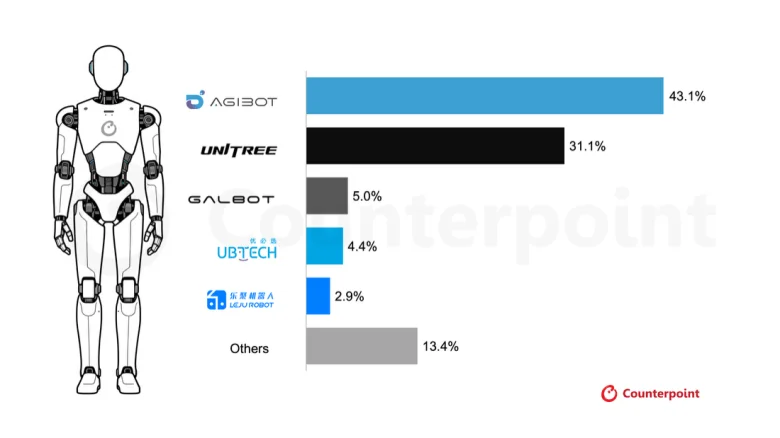
Three primary factors are contributing to China's advantageous position in the humanoid robot market: cost efficiency, substantial investment, and a vast pool for testing. With an established manufacturing base that benefits from the electric vehicle supply chain, robot manufacturers can access necessary components locally, enabling quicker iterations and reduced costs. According to Counterpoint Research, in the first half of 2026, five Chinese companies accounted for a staggering 86% of global humanoid robot shipments.
Investment is another crucial driver. For instance, XPeng's robotics unit secured over $900 million in August, reaching a valuation exceeding $6.3 billion. Similarly, Galbot raised RMB 2.5 billion (around $362 million) in March, further solidifying its market position.
China’s expansive and varied market applications also provide fertile ground for humanoid robots, which are currently being trialed in sectors like automotive manufacturing, electronics, logistics, aerospace, and energy. Nevertheless, actual commercialization remains nascent, with a mixture of purchases, pre-orders, and pilot projects rather than widespread orders.
The Challenges Ahead
While China exhibits significant momentum, notable obstacles persist. Questions surrounding AI integration and comprehensive software solutions remain prevalent. The industry currently relies heavily on Nvidia’s chip technology, despite domestic efforts to develop alternatives. Additionally, challenges associated with translating physical capabilities into sustained commercial viability persist. Jiang Han, a senior researcher at the Pangoal Institution, points out that repeat orders and reliable customer payback periods are indicators that robots are addressing genuine problems, rather than merely attracting trials.
Data accessibility poses another hurdle, as developing physical robots doesn’t allow for the same data-sourcing strategies employed in AI. Developers are now exploring synthetic data, simulated environments, reinforcement learning, and real-world applications. Harry Mellsop from Antioch refers to the current state of physical AI as its “GPT-2 era,” suggesting that greater data and computational resources are necessary for advancement.
Reliability remains critical; even a 99% success rate translates to significant failure in practical usage. Fu Sheng, CEO of Cheetah Mobile and OrionStar, noted at BEYOND Expo that achieving reliability across extended periods is vital for operational adoption.
Furthermore, safety and security considerations are paramount. A high-profile failure could instigate public apprehension as deployments ramp up. Jiang also highlighted issues related to supply-chain security and data compliance as challenges that Chinese manufacturers need to resolve, especially for entry into Western markets.
Focusing on Specialized Roles
Yuli Zhao, chief strategy officer at Galbot, foresees demand for humanoid robots beginning with well-defined roles in manufacturing, logistics, and retail environments. These sectors feature repetitive tasks with clear workflows, offering the best opportunities for delivering value. This specialization could pave the way for broader commercial viability.

Fu echoes this sentiment, advocating for focusing on specific tasks rather than pursuing a general-purpose robot. He suggests that concentrating on areas like agriculture, transport, and sorting could yield more immediate commercial benefits while improving deployment efficiency and reliability.
In the long run, achieving general intelligence is still the aspiration. Jiang believes that a major breakthrough would involve developing an embodied intelligence model capable of interpreting natural language and resolving complex tasks. The challenge lies in navigating unstructured environments, where unknown variables can lead to failures.
China’s ability to move quickly through the research, development, and deployment cycle could play a pivotal role in advancing humanoid robotics. Zhao refers to the country's clear advantage in “speed-to-scale,” wherein rapid prototype-to-deployment loops enhance the speed of integration and prompt iterative improvements based on operational feedback.
Discussion
Sign in to join the discussion.