Apple's iPhone Duo joins the foldable smartphone segment, raising the bar for user experience as it faces off against established Chinese competitors.
Apple's Strategic Foray into Foldables
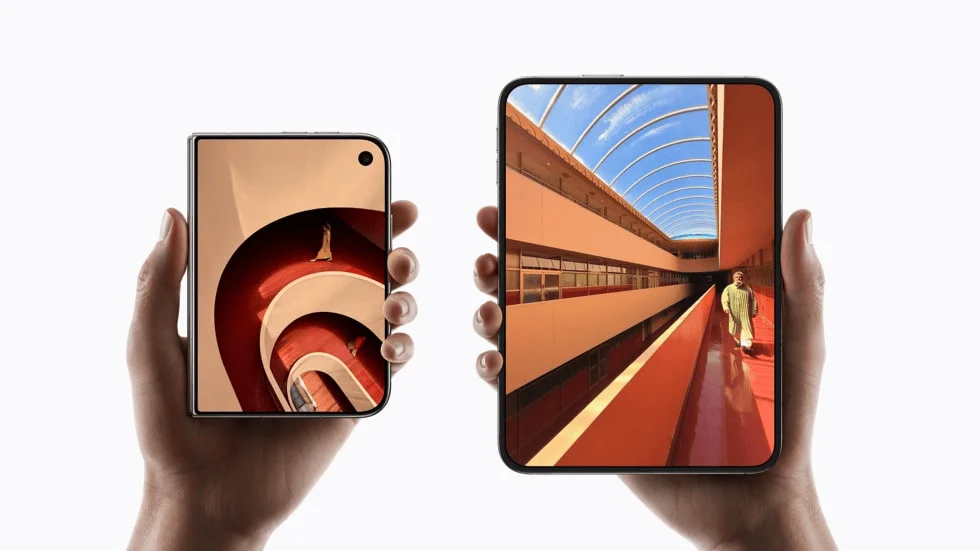
Apple has officially launched its inaugural foldable smartphone, the iPhone Duo, priced at $1,999. This device showcases a dual-display approach: it features a 7.6-inch inner display that opens up to a tablet-like experience and a 5.4-inch outer display for typical smartphone use.
Powered by the new A20 Pro chip, the iPhone Duo not only supports split-screen multitasking but also accommodates the Apple Pencil, catering to creative professionals and multitaskers. Apple emphasized advancements in its hinge technology, aimed at minimizing the crease's visibility, and an optimized iOS interface designed specifically for the foldable format.
Understanding Apple's Design Philosophy
Apple's promotional materials illustrate a clear vision for the iPhone Duo. Through dynamic transitions in their marketing, the company positions the device not merely as a piece of hardware but as a versatile tool that adapts to various user scenarios. This perspective on the foldable design aligns with Apple's consistent iteration on user experience.
The Foldable Competition Landscape
However, Apple’s debut does not occur in a vacuum. Chinese manufacturers like Huawei, Xiaomi, Oppo, and Vivo have been active in the foldable market for some time. They have released several generations of foldable smartphones, refining features like weight, thickness, battery life, and software capabilities.
The iPhone Duo adopts a traditional book-style horizontal fold, placing it firmly in territory that has already been explored by its Chinese counterparts. For instance, devices like Huawei’s Mate X7 and Oppo’s Find N6 showcase advanced engineering with thinner profiles and reduced weights compared to the Duo, which weighs in at 254 grams and measures 11.3mm when folded.
Looking at the numbers, Huawei’s Mate X7 comes in at about 235 grams and 9.5mm thick when folded, while the Oppo Find N6 weighs around 225 grams and measures 8.93mm. This indicates that Apple is entering a rapidly evolving foldable market where the competition's focus has shifted away from mere folding capabilities to overall user experience and usability in everyday life.
Apple’s Edge in Ecosystem Integration
One might argue that while Apple is playing catch-up in foldable technology, the company's tightly-knit ecosystem of hardware and software offers a notable edge. The iPhone Duo doesn't just serve as a smartphone; it integrates with other Apple products, enhancing its utility for existing Apple users. Features like the A20 Pro chip and multifaceted software capabilities are designed to provide fluidity across devices, something that other brands may find difficult to replicate.
Challenges Beyond Hardware
Despite the heavy focus on hardware specifications, the main challenge remains how to leverage the larger screen effectively. The iPhone Duo’s introduction of split-screen multitasking is a move to make the most of its display real estate. Apple is not merely enhancing the existing iPhone experience; they’re inviting users to reimagine how they can use their phones in new, innovative ways.
Similarly, Chinese brands are exploring their unique software approaches. The Vivo X Fold6 supports multitasking on its expansive display, while the Oppo Find N6 offers advanced desktop-style interactions with adjustable windows. Huawei’s Mate XT 2 also pushes the concept of productivity, evolving its tri-fold design into an immersive AI-powered tool.
A New Course for Competition
As Apple steps into the foldable arena, it doesn't just face off against Chinese manufacturers but instead ignites a broader conversation about the future of smartphones. Both Apple and the Chinese brands are not only competing on hardware innovation but are also redefining how smartphones fit into users’ lifestyles.
For Chinese manufacturers, Apple’s entry serves as both a challenge and a validation of their years of development. Up until now, brands like Huawei have explored features that enhance productivity beyond classic phone interfaces, and Apple’s entry could help propel foldable devices into mainstream appeal.
Conclusion: The Shift in Consumer Expectations
As the foldable smartphone market continues to mature, the key question with Apple’s entry is whether consumers will see foldables as a true evolution in smartphone use or just an expensive alternative to existing options. For Chinese smartphone makers, the focus is shifting beyond the act of folding to how effectively they can harness the advantages of a foldable device. The race isn't just about who makes the best hardware anymore; it's about who can create the most transformative user experience.
Discussion
Sign in to join the discussion.