August 2026 saw a notable decrease in critical vulnerabilities, with a focus on AI-assisted exploits. Here’s what key players need to know for risk management.

August 2026 marked a shift in the cybersecurity landscape, as Insikt Group identified 73 significant vulnerabilities necessitating urgent remediation. This count represents a 14% reduction compared to the previous month, with 43 of those vulnerabilities receiving a Very Critical Recorded Future Risk Score. Among this list, 31 were derived from the US Cybersecurity and Infrastructure Security Agency (CISA)’s Known Exploited Vulnerabilities (KEV) catalog, showcasing the ongoing collaboration between government entities and cybersecurity firms. 32 vulnerabilities were verified from open sources, seven from security vendor telemetry, and three were exclusively discovered via honeypot data.
A broad swath of vendors was impacted, with products from 45 different companies showing vulnerabilities. Notably, Microsoft was linked to around 11% of these identified risks. However, the vulnerabilities also spanned a wide array of sectors, including remote monitoring and management, virtualization, collaboration tools, artificial intelligence, and network edge technologies, demonstrating that the threat is pervasive across the tech ecosystem. This should raise alarms: organizations across various industries might not be aware of their exposure to these risks, making it critical for cybersecurity teams to maintain awareness and robust security protocols.
Detection and New Vulnerabilities
In terms of proactive measures, Insikt Group developed Nuclei templates designed to detect significant vulnerabilities like CVE-2025-62593 (Ray), CVE-2026-72898 (Metabase), and CVE-2026-9198 (IBM Langflow). It’s important to note that templates for CVE-2026-3395 (MaxSite CMS) and CVE-2026-59800 (decolua 9Router) were available but reported exploited in July, hence not included in the August assessment. This meticulous approach to vulnerability detection exemplifies how essential it is for cybersecurity teams to continuously evolve their tools and tactics in response to emerging threats.
By creating these tailored detection templates, the Insikt Group aims to close gaps that might leave organizations exposed. The transition from reactive to proactive remediation is pivotal in cybersecurity strategy. But there's always a catch: keeping pace with this relentless innovation often stretches resources thin. How many firms have the capacity to implement these updates quickly? And will they fall behind as a result? If you're working in this space, these questions hit home.
Additionally, the Insikt Group took steps to address a notable concern with Apache Log4j by creating a Nuclei template for GitHub Issue #4255, despite it not being officially classified with a CVE due to being viewed as a hardening gap. This underscores a recurring issue in the industry—often, vulnerabilities exist that don’t get formal recognition until they are exploited, leaving organizations vulnerable longer than necessary.
Exploited Vulnerabilities and Key Trends
The cybersecurity community should pay close attention to the following trends observed during August 2026:
- A total of 34 vulnerabilities allowed for remote code execution (RCE), impacting a variety of software categories like Microsoft productivity tools, database servers, and application delivery solutions. This should raise eyebrows; RCE is a coveted method for attackers, allowing them to take control of systems and conduct extensive damage.
- Public proof-of-concept (PoC) exploits have emerged for 53 of the vulnerabilities listed, marking a shift towards easily exploitable issues that cybersecurity teams need to address immediately. The accessibility of these PoC exploits means that even less sophisticated attackers can potentially launch effective campaigns against vulnerable systems.
- Weakness classes that emerged as particularly concerning included CWE-94 (Code Injection) and CWE-502 (Deserialization of Untrusted Data), each appearing seven times among the identified vulnerabilities. These classes represent a significant threat; they exploit fundamental programming oversights that are often overlooked in software development.
- Interestingly, 17 of the vulnerabilities cataloged were at least five years old, with the oldest being around 16 years, suggesting that older vulnerabilities continue to pose risks if not remediated. This should serve as a wake-up call; legacy systems and their vulnerabilities are far from obsolete and need continued scrutiny.
AI and Cybersecurity Exploits
In a revealing case study, the Insikt Group reported on the Chinese-speaking threat group UAT-10147, which combined traditional exploit techniques with artificial intelligence-driven post-compromise operations against various web servers. The group utilized CVE-2019-18935 exploiting Telerik UI for ASP.NET AJAX, along with multiple other vulnerabilities throughout its campaign. After initial access, the crew employed vulnerabilities for privilege escalation on Linux systems, showcasing the evolving tactics utilized by sophisticated threat actors. In essence, they are no longer just looking for a single entry point; they're employing multi-layered strategies for maximum impact.
Another significant observation was the dual deployment of conventional tactics alongside AI tools like DeepAudit and PentestGPT following a breach. This highlights the necessity for cybersecurity professionals to remain vigilant not just regarding vulnerabilities but also about the potential integration of AI in post-exploit strategies. As attackers harness AI to streamline their efforts, defenders need to likewise consider how automation and machine learning can be employed to bolster their defenses.
Future Implications and Significance
The vulnerabilities identified in August 2026 present an urgent call to action for organizations. With remote code execution vulnerabilities proving highly impactful and the emergence of AI in cyber operations, it's clear that organizations need to prioritize vulnerabilities based on the insights provided and ensure proactive measures are in place to mitigate risks effectively.
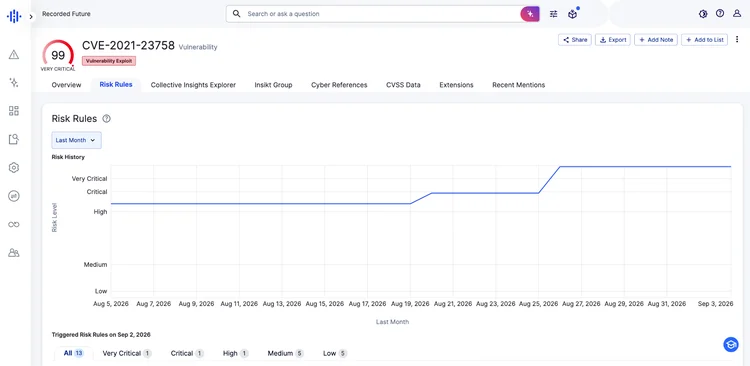
The need for continuous vigilance in vulnerability management is paramount, especially as threat actors become more adept in their tactics. This is more significant than it looks; organizations can't afford to sit back and wait for their existing vulnerabilities to be exploited. Instead, they’ll need to adopt a proactive stance and regularly inspect their technology stacks for outdated software and known flaws. The risk isn't just technical—it's reputational, financial, and potentially catastrophic. If companies don’t evolve alongside the threats, they might find themselves left behind in a race against increasingly sophisticated adversaries.
Discussion
Sign in to join the discussion.