Integrating AI with threat intelligence reframes cybersecurity, enhancing risk assessment and enabling proactive defense tactics against adversaries.

AI's Role in Evolving Cyber Defense
Leveraging artificial intelligence extends beyond mere speed and automation in cybersecurity. The significant transformation happens when AI intertwines with threat intelligence, which provides insights into both adversarial tactics and internal vulnerabilities. This combination enhances defensive strategies, allowing organizations to bridge the historical gap between attackers and defenders.
The Dilemma Facing Traditional Defenders
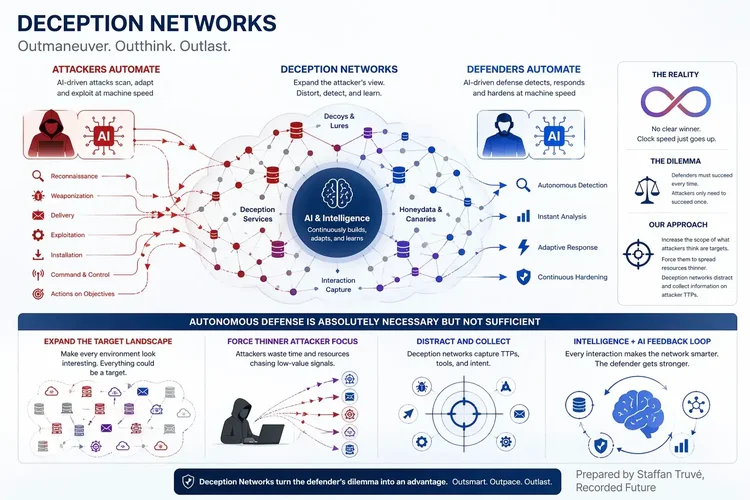
The ongoing imbalance in cybersecurity is stark: defenders need to secure every entry point, while attackers require only one exploitable weakness. Defenders face multiple constraints like budget limitations and compliance requirements, while attackers have the luxury of time and selective targeting.
Historically, threat intelligence has been a reactive tool for defenders, offering indicators of compromise or reports on threat activities. While valuable, these insights often lacked immediate relevance to a defender’s unique environment, making timely intervention difficult without extensive resources. This challenge has been a barrier to effective resource allocation in cybersecurity.
A New Era of Automation
While AI has been instrumental in enhancing cybersecurity operations, most of its current application revolves around automating existing workflows. This includes optimizing alert management, enriching incident responses, expediting patch prioritization, and supporting tier-one Security Operations Center (SOC) workflows. Such enhancements improve operational efficiency but are insufficient alone to reshape defensive capabilities fundamentally.
The Fusion of Threat Intelligence and AI
The breakthrough occurs at the intersection of AI and threat intelligence. When AI can analyze real-time data regarding both attacks and defenses, it significantly enhances situational awareness and response efficacy. The ability to continuously assess threats in connection with known vulnerabilities can reshape traditional defensive strategies.
Real-Time Mapping of Attacker Techniques
Traditionally, defenders would rely on manual processes to correlate the information obtained from threat intelligence with their operational environment. For instance, assessing whether a vulnerability cited in a report affects their systems was labor-intensive. AI can transform this by continuously matching attacker tactics, techniques, and procedures (TTPs) against live infrastructure, offering a rapid, prioritized risk assessment that involves less guesswork and more informed decision-making.
Combining Offensive and Defensive Intelligence
Defenders historically categorized knowledge into two silos: external threats and internal vulnerabilities. AI enables a continuous synthesis of these realms, providing an integrated understanding of how attacker capabilities intersect with existing weaknesses. This capability shifts the perspective from a static vulnerability report to a dynamic risk analysis that informs real-time defensive strategies.
Dynamic Vulnerability Prioritization
Prioritization of vulnerabilities has often relied on theoretical assessments such as CVSS scores, failing to consider contextual factors like attacker intent or current threat landscapes. AI models trained on actionable threat data can prioritize vulnerabilities based on real-world exploitation trends, significantly enhancing the relevance of mitigation strategies in real-time cybersecurity operations.
Contextual Reasoning Across Logs
Standard detection systems typically depend on correlating separate events through established rules. However, AI can deliver comprehensive judgments by synthesizing fragmented logs and telemetry data with contextual awareness informed by threat intelligence. This nuanced approach enables more accurate detection of unusual activities by relating them to known adversarial patterns.
Ongoing Attack-Path Assessments
Traditional exposure assessments are periodic, relying on scheduled penetration tests. AI evolution allows for a continuous model that actively evaluates exploitable pathways to critical assets in real-time. When enhanced with threat intelligence, these models proactively adapt to shifting threat landscapes, providing defenders with ongoing insights into their vulnerability exposure.
Proactive Deception and Strategic Countermeasures
While the AI-driven enhancements primarily focus on strengthening defensive mechanisms, they also introduce proactive deception techniques that mislead attackers. The convergence of threat intelligence and AI allows for more sophisticated deception strategies, making environments less predictable for adversaries.
Adaptive Deception Mechanisms
Conventional deception tactics, such as honeypots, were limited by their static nature. AI-driven environments can now mimic real technologies and user behaviors, dynamically adapting as adversaries interact with them. This evolution helps create believable decoy infrastructures that keep attackers engaged and mislead them more effectively than static traps.
Strategic Placement of Decoys
The insights from threat intelligence enhance decision-making regarding where to place deceptive elements. By understanding a threat actor's typical methods and targeting strategies, organizations can position decoys in ways that maximally disrupt an attacker’s efforts and increase the cost of engagement.
Gathering Intelligence Through Deceptive Engagement
Active engagement within deception environments can yield vital intelligence about attacker methodologies. By facilitating interactions that seem genuine, defenders can glean insights into adversaries’ tools and intentions. This not only enhances understanding but also enables continuous refinement of both defensive and deceptive strategies, creating a loop of ongoing intelligence improvement.
Dismantling Knowledge Barriers
A critical shift facilitated by AI is democratizing access to intelligence-driven cybersecurity. With tools that allow analysts to easily query vulnerabilities related to specific threat groups, the technical barrier to effective intelligence use lowers significantly. This transforms the operation model, enabling security teams to utilize threat intelligence more broadly rather than relying solely on specialized roles.
Implications for Future Cyber Defense Strategies
The implications for cybersecurity operations are profound. AI has the potential to reshape how organizations understand and defend against attacks, moving from a reactive posture to one where intelligence informs proactive, timely decisions. This not only helps to identify the most likely attack vectors but allows defenders to allocate resources more judiciously and efficiently.
Conclusion: The Changing Nature of Cybersecurity
The emergence of autonomous systems in cyber defense introduces a shifting paradigm, where defenders must keep pace with autonomous adversaries. The potential for an arms race in AI-enhanced tactics raises critical questions regarding governance and operational integrity. Organizations must embrace these evolving technologies to stay competitive, understanding that mere automation of traditional processes is no longer sufficient. The game is now deeper: defenders can no longer afford to operate under constant uncertainty but may now strategically anticipate adversarial actions in a dynamically shifting threat environment.
Discussion
Sign in to join the discussion.