China's humanoid robots are evolving beyond showcases, demonstrating their potential in everyday tasks and industry applications.
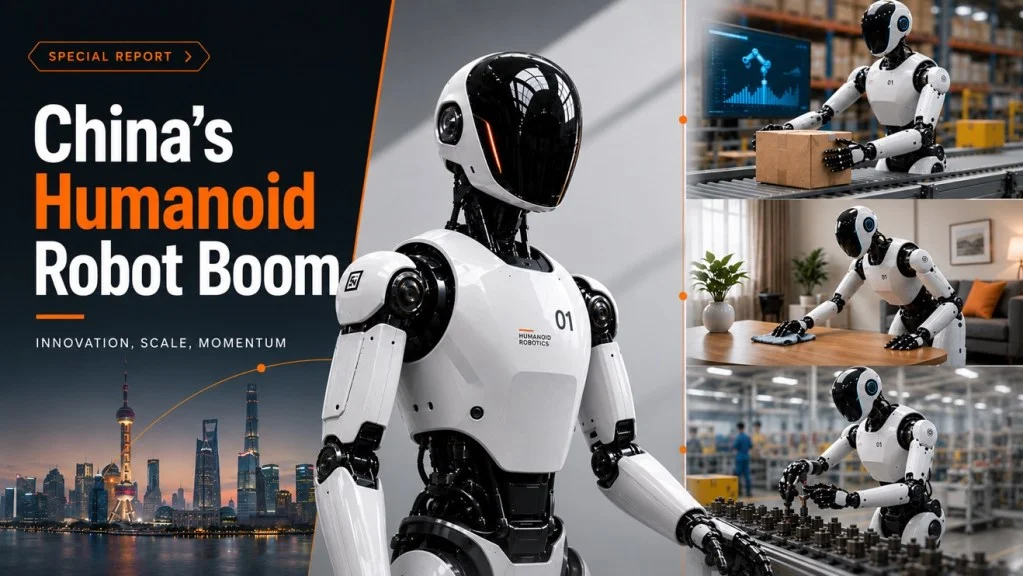
At the recent 2026 World Robot Conference (WRC) held in Beijing, the spotlight was on how robots can integrate into daily life and work environments. From a noodle-cooking robot to humanoids engaging in kickboxing, the event showcased over 3,000 products from 373 companies under the engaging theme of “Human-Robot Symbiosis, Production-Demand Convergence.”
Showcasing Utility and Creativity
The exhibition wasn't just about flashy displays; it highlighted practical applications for robots. Galaxea AI introduced their G1 model, which demonstrated its capabilities in a simulated domestic scenario. The robot prepared breakfast by utilizing a toaster and a drink pitcher, even displaying adaptive skills by correcting its pouring when the cup was moved. This kind of real-world functionality could significantly change household dynamics, especially as people look for technology that can ease daily chores.
On a different note, CASBOT surprised attendees with a robot rock band, consisting of an electric guitarist and other musicians, performing hits from well-known Chinese bands as well as an original track titled “Heat Dissipation.” While the performance was entertaining, it also signals a growing trend towards using robotics in entertainment. This intersection of technology and art raises intriguing questions about creativity and if machines can express emotions through music.
Li-Gong contributed to the industrial aspect of the conference, showcasing their LiDian F1 robots in a continuous workflow demonstration. These robots efficiently disassembled components before sorting, transporting, and reassembling them, exemplifying how robots can enhance manufacturing processes. The emphasis on operational efficiency demonstrates that factories are not just looking for automation but for smart automation that can adapt to varying production demands.
Unitree also made a statement in automation with kickboxing matches, where a team from North China Electric Power University used a teleoperated Unitree G1 to claim victory against a rival team, illustrating both competition and collaboration in robotics. This competitive edge highlights a critical point: technology doesn’t just automate—it also engages and entertains, potentially drawing more interest from younger generations.
The increasing prevalence of biomimetic robots from companies like UBTECH and AheadForm reflects a trend towards designs that mimic human appearance and movement more closely. Developers are focusing on fine-tuning aspects such as body symmetry, movements, and even facial expressions, enhancing their robots' anthropomorphic qualities. The human-like features serve not only to create more relatable machines but also prompt discussions about the ethics of human-robot interaction. If you’re working in this space, these insights are essential as consumer acceptance often hinges on these very attributes.
Unexpected Moments and Real-World Potential
Some of the conference's most memorable highlights involved robots showcasing unforeseen behaviors. During the World Humanoid Robot Games, the Tiangong Omni caught everyone's attention not only for winning a small-size 400-meter race in 45.66 seconds but also for its unique running style, which garnered comparisons to a person shyly covering their face. The incident captured the unpredictability of robotics development—machines can outperform expectations yet still act in ways that are unexpected, preserving some semblance of human quirks.
This unexpected performance arose from design choices concerning rapid arm movement, according to Han Gang from the Beijing Humanoid Robot Innovation Center. While the arm position was not the original design, it inadvertently reduced shoulder stress and managed energy efficiency over the race distance. Such insights remind us of the often-unpredictable relationship between design and functionality. Here’s the thing: engineers must remain flexible in their approach, as unexpected outcomes can yield valuable data for future iterations.
The Challenge Ahead
China's humanoid robot industry is at a pivotal moment as it transitions from exhibition-driven presentations to practical, large-scale implementation. The successes seen at events like the WRC will be essential for addressing actual market requirements and gauging how these machines can be reliably utilized in varied settings beyond simple demonstrations. The challenge lies not just in showcasing technical prowess but in creating units that are durable, safe, and capable of functioning in real-world situations. Will companies prioritize flashy design over functionality? That’s an ongoing debate.
Implications and Future Outlook
As the conference illustrated, the innovations showcased in Beijing reflect a burgeoning awareness that robotics must serve practical purposes rather than provide mere spectacle. This focus could lead to accelerated integration of robots into everyday tasks and sectors like health care, education, and even customer service. The ripple effects of such developments are immense. If human-robot collaboration becomes a standard aspect of various industries, the implications for employment, ethics, and even social interactions could be profound.
The attention towards biomimicry indicates that future robots may become increasingly human-like, potentially leading to ethical dilemmas about their roles in society. And while some people may embrace this evolution, others will undoubtedly voice concerns about machines replacing human jobs or the nature of relationships with non-human entities. As this technology continues to advance, one question remains: How will society adapt to an era where robots are no longer just tools, but companions in everyday life?
Discussion
Sign in to join the discussion.