Galbot is at the forefront of integrating embodied AI into industrial settings, aiming to create adaptable robots for modern manufacturing challenges.
For years, industrial robots have primarily focused on repetitive tasks within tightly controlled environments like automotive and electronics manufacturing. Their precision and reliability have made them indispensable. Yet, as we move towards more dynamic production processes, the demand for robots that can adapt to complex, less standardized tasks is growing.
Enter Galbot, a Chinese company harnessing embodied AI to transition robots from the lab into practical manufacturing settings. Founded in May 2023, Galbot is strategically integrating robotic hardware with intelligent models and comprehensive data systems to address these industry needs.
Galbot has garnered significant investor interest, raising over RMB 2.4 billion (approximately $360 million) by 2025. Notably, a financing round in June 2025 brought in RMB 1.1 billion ($160 million), followed by another RMB 2.5 billion ($370 million) round in 2026. The company, backed by prominent figures in the AI space including the National Artificial Intelligence Industry Investment Fund, has achieved a valuation exceeding RMB 22 billion (about $3.27 billion).
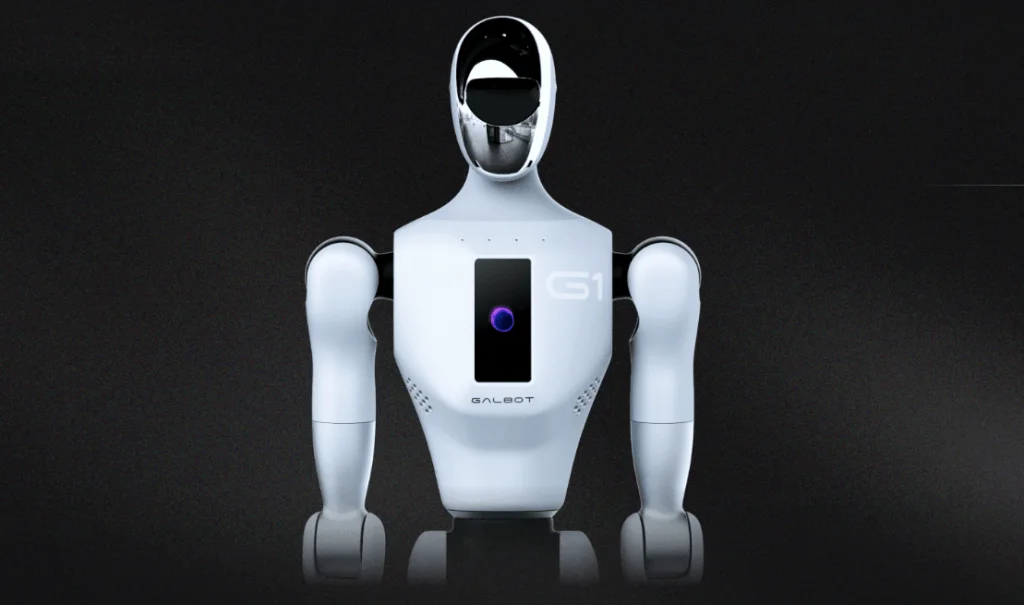
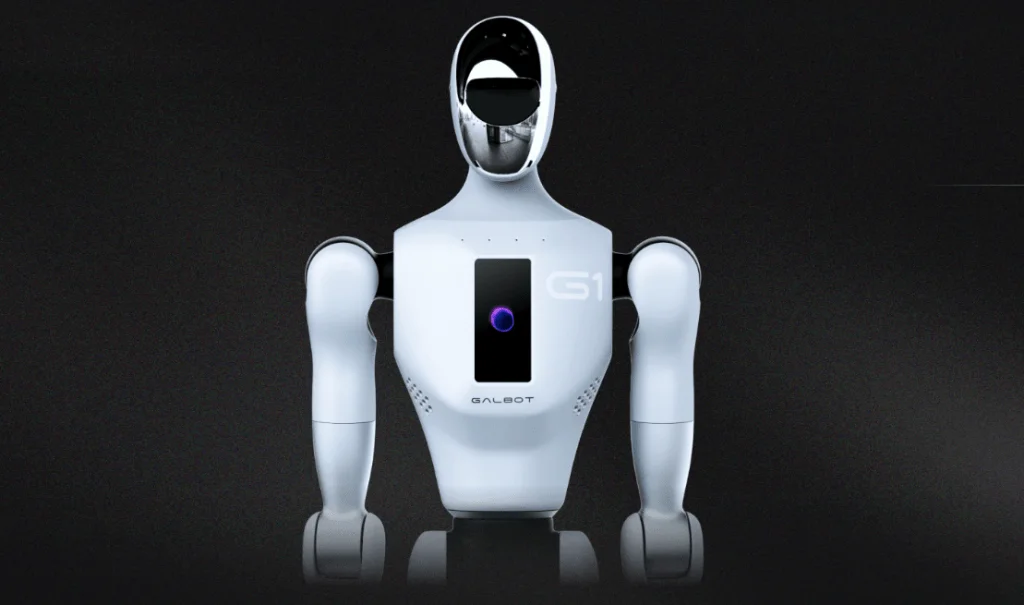
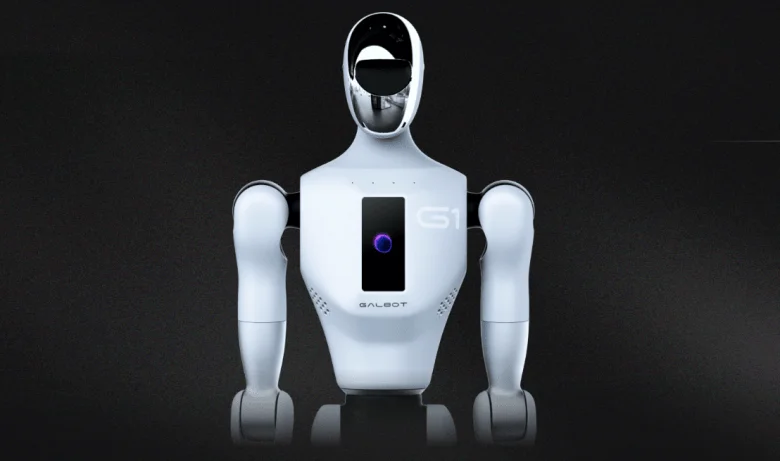
One of its key products, the Galbot G1, showcases a mobile platform coupled with a dual-arm manipulation system. This design overcomes the limitations of fixed robotic arms that are bound to particular stations. G1's enhanced mobility allows it to perform a variety of tasks—ranging from picking and transporting to organizing items—across diverse manufacturing environments.
Mobile manipulation robots like the G1 present a significant advantage over their stationary counterparts. Traditional robots are typically confined to designated spots and have set workflows, while Galbot’s mobile units adapt their actions according to variable tasks, making them well-suited for the increasingly flexible scenarios that modern manufacturing demands.
With many production lines still reliant on human labor for material handling, sorting, and component loading—tasks that often require adaptability—this is where embodied AI robots shine. Traditional automation struggles to keep up with the nuances of human-operated tasks, leaving a gap that Galbot's technology is poised to fill.
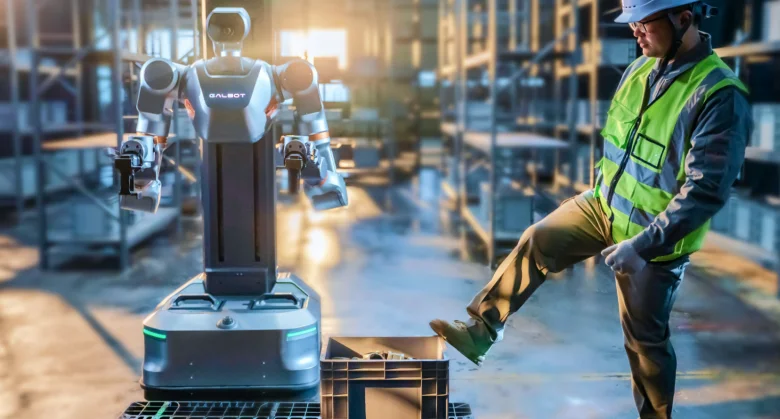
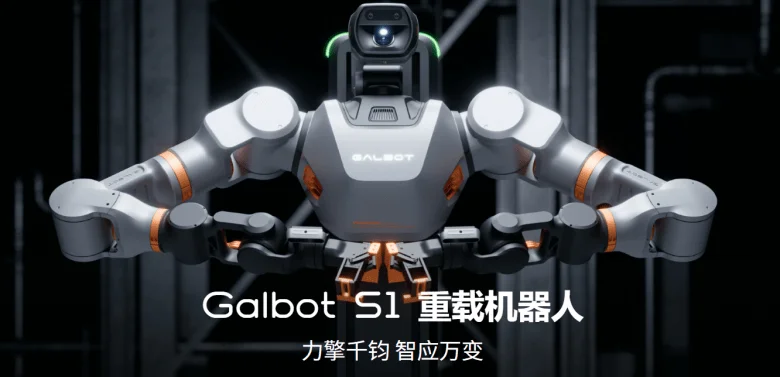
Galbot has also introduced the Galbot S1, specifically tailored for industrial tasks, focusing on operations like transportation, palletizing, and machine loading. By automating these labor-intensive processes, the S1 aims to alleviate the economic pressures of rising labor costs.
Industrial applications are considered a pivotal pathway for commercializing embodied AI robots. Manufacturers seek automation to enhance efficiency, and unlike more chaotic environments such as homes, factories provide structured conditions that facilitate long-term operational success for robots.
It’s essential to understand that integrating robots into manufacturing isn't merely a replacement for human workers; it suggests a transformation of production methodologies. Future workplaces could see robots taking on high-intensity and repetitive tasks while collaborating with human employees to boost both productivity and safety.
A major factor driving this industrial adoption lies in advancements in AI capabilities. Traditional robots rely heavily on engineers for programming movements, while embodied AI robots must master understanding, planning, and learning. Galbot’s AstraBrain embodies this evolution by integrating visual perception, task planning, and motion control, enabling robots to comprehend complex instructions and adapt to shifting environments.
This transition marks a departure from merely executing predefined actions, showing a clear path toward robots managing intricate tasks. However, the journey toward broad industrialization of embodied AI robots is still in its infancy, with persistent hurdles like cost, reliability, and the ability to scale deployment posing significant challenges. The crucial test for robotics companies will be demonstrating consistent operation in real-world settings, proving that these machines can deliver measurable value.
As AI and robotics increasingly converge, industrial sectors are poised to become vital gateways for embodied AI commercialization. Galbot’s milestones represent just the beginning; the critical question remains whether they can establish robots as essential contributors in industrial environments, addressing real production challenges and paving the way for the next wave of manufacturing advancements.
Discussion
Sign in to join the discussion.