AgiBot’s evolution highlights a critical shift in robotics, focusing on AI integration and data systems rather than just mechanical hardware.
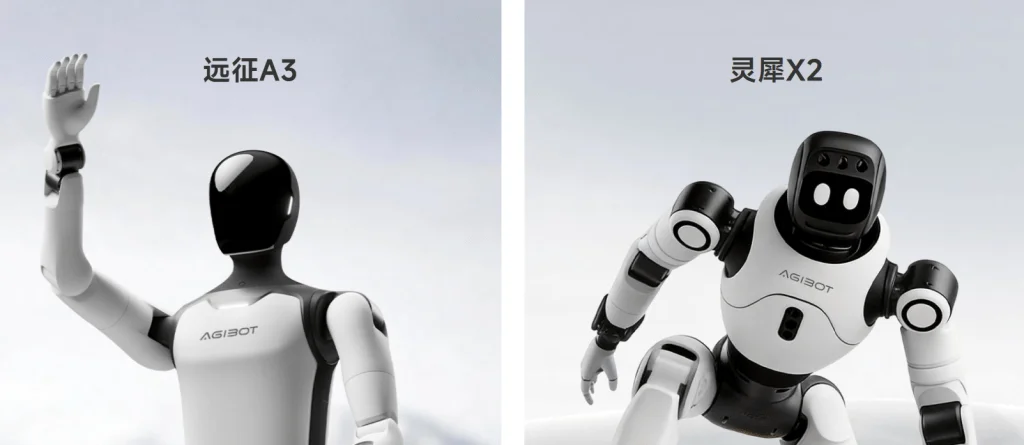
If we consider the trajectory of the robotics industry a few years back, competition was largely about who could construct the most advanced robot. Fast forward to 2026, and that paradigm is shifting significantly. Robotics is no longer just about hardware; it’s about creating adaptable systems that can learn and improve over time.
The Evolution of AgiBot
AgiBot’s recent advancements illustrate how robotics companies are redefining their boundaries. Instead of being confined to hardware production, AgiBot is evolving into an entity that merges robotics with artificial intelligence, foundation models, and data analytics. This evolution reflects a broader trend within the industry where companies recognize that having the best physical robot isn’t enough. The future belongs to those who can combine strength in robotics with intelligence through AI.
Key Developments in AgiBot’s Product Line
This year, AgiBot has continued enhancing its portfolio, including noteworthy products like the Expedition A3. Their latest release, the GO-2, an embodied foundation model, stands out for its ability to improve robots' understanding, planning, and execution of complex tasks. It’s not just an upgrade; it’s a signal that robots will increasingly need cognitive capabilities to succeed in real-world situations.
Another significant innovation, Genie Sim 3.0, utilizes sophisticated simulation environments to generate training data. This is essential as training data is the bedrock for any machine learning system. Projects like AGIBOT WORLD and the GE-2 Action World Model integrate data, models, and robotic hardware into an increasingly cohesive technology ecosystem. This integration means that the barriers between data collection and practical, actionable intelligence are narrowing.
Shifts in Competition Dynamics
What’s evident from these innovations is a trend where the robot itself is evolving from being merely a product to a sophisticated carrier for intelligent systems. Historically, distinguishing features in robotics involved mechanical design and motion control. The more agile, reliable, and cost-effective a robot was, the better its competitive advantage. However, that’s changing, and fast.
As the industry moves forward, new challenges are coming to the forefront. Companies are grappling with questions around a robot's ability to navigate intricate environments, adapt to unfamiliar tasks, and learn from singular encounters to transfer knowledge across units. These inquiries echo the foundational challenges faced by AI technologies. It's no longer enough for a robot to perform a set task; it must be able to learn from its experiences—something AI has struggled with despite its reputation.
By 2026, the focus of competition is shifting from hardware manufacturing to learning capabilities. This transition underscores the growing importance of data in the robotics sector. Companies that can harness and analyze vast amounts of data will set themselves apart. Those that can’t will find themselves sidelined.
The Role of Data in Robotics
AgiBot’s prior initiative, AGIBOT WORLD, has amassed millions of real-world data samples, which serves as a foundational asset for their learning algorithms. In 2026, the Genie Sim 3.0 further expanded this repository, boasting over 10,000 hours of simulated data and an evaluation framework for more than 100,000 scenarios. That’s not just numbers; it’s an illustration of how serious the company is about data-driven development.
AgiBot has also initiated the Hive Data Co-Creation Initiative, aimed at scaling data production to tens of millions of hours this year. The endeavor incorporates real-world data collection and simulation training into a cohesive data loop. This automated cycle not only accelerates learning but also enhances the robots' adaptability in dynamic environments.
Collecting real-world data is often expensive, so the use of simulation allows robotics systems to experiment and learn in controlled environments, creating a cycle of data collection, training, model refinement, and eventual real-world applications. It's an efficient strategy, but it raises questions about the quality of simulated data versus real-world situations. How close can simulations get to the unpredictable nature of reality?
Once this cycle is operational, the competitive landscape will evolve beyond mere hardware specs. Companies will vie for data volume, model efficacy, and the rapidity of iterations. This suggests that the companies with better access to data will have a distinct edge. And that advantage won’t just be in development; it’ll also influence market domination.
A Shift Toward Integrated Systems
AgiBot's objective transcends the development of standalone robotic products. Instead, the focus is on constructing an integrated system encompassing robotic hardware, data management, model development, and training tools. This model leads to robots entering real-world applications supported by a continuous stream of data-driven learning. If you're working in this space, consider how this streamlined approach could disrupt traditional robotics.
This approach diverges markedly from traditional robotics paradigms and aligns more closely with the business trajectories of AI firms. While mechanical reliability and cost efficiency will remain essential, the future competitive battleground involves a synthesis of hardware, models, data, and practical applications. The earlier emphasis on simply “building a better robot” is fading fast.
What to monitor in 2026 won't be simply which company builds the most advanced humanoid robot, but which one establishes an ecosystem that fosters the ongoing intelligence of these robots. This is more significant than it looks; those ecosystems could enable rapid advancements far beyond what today’s technology can achieve.
The earlier challenge was whether robots could move; the present question is whether they can learn. AgiBot's current strategies signal a pivotal transformation in the industry, with robot manufacturers increasingly morphing into AI-centric enterprises. And yet, there's skepticism: can the industry truly deliver on the promise of agile, learning robots? Only time will tell.
Implications and Future Outlook
This ongoing shift has broader implications not just for robotics, but for industries reliant on automation. As robots become more capable of learning and adapting, they’ll inevitably take on more complex roles across various sectors, from manufacturing to services. The implications could be profound: workforce dynamics may shift as robots handle tasks once reserved for specialized human labor.
That said, with great power comes great responsibility. The ethical considerations and regulatory frameworks will need to evolve in parallel with technological advances. Questions about job displacement, data privacy, and the deployment of autonomous robots in sensitive environments will take center stage as discussions around technology's role in society intensify. After all, creating intelligent robots isn’t just about technology; it’s about shaping the future.
As the robotics industry matures, you can expect to see a tremendous push for not just smarter robots, but also for responsible practices surrounding their development and deployment. The challenge here will lie in balancing rapid innovation with the need for ethical considerations—a balancing act that will define the future of robotics.
Discussion
Sign in to join the discussion.